Diplomacy
Arunachal’s Restless Frontier: Why the India-China Border Is Heating Up Again
By Sameer Hussain |
From a line drawn in 1914 to a standoff at Taksing in 2026, the eastern…




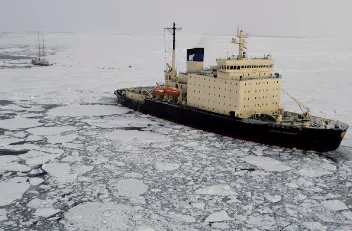
The creation of the Arctic Council has been predicated upon an assumption that is now void in its entirety: namely, that the Arctic Eight, regardless of their geopolitical disputes elsewhere, can preserve the High North as a safe haven outside the scope of geopolitics. This assumption was shattered in March 2022 as the Arctic Seven suspended cooperation with Russia in the aftermath of its aggression against Ukraine. Rather than witnessing the failure of Arctic governance, one has witnessed its bifurcation: the partial and Russian-free continuation of working groups’ activities on one side and the turn of the Russian Arctic towards the BRICS+ countries on the other. As scholars of the Arctic such as Rasmus Bertelsen have argued, this is truly a structural change in that the order of the region is now characterized by the end of the short period of post-Cold War unipolarity and the beginning of a Sino-American bipolarity superimposed on regional multipolarity, whereby the region is itself split into a US/NATO-led Arctic and a Russian Arctic expanding outwards.
This is significant not just for the Arctic Eight themselves, but also for how non-Arctic nations interact with the region.
India does not have any access to Arctic coastal waters located north of the Arctic Circle, nor does it lay any claims to the Arctic continental shelf or to the exclusive table reserved by eight Arctic states for themselves. Yet India has developed a growing presence in the Arctic region by becoming an Arctic Council observer in 2013, establishing Himadri research station in Ny-Ålesund, IndARC underwater observatory in Kongsfjorden, and publishing its first national Arctic policy entitled “India and the Arctic: Building a Partnership for Sustainable Development” in March 2022, which happened to be the very month when the Arctic Council decided to put its work on hold.
Timing is no coincidence. It so happens that as the governing body in the Arctic was breaking down along the very fault lines that India would have to negotiate, India itself came out with a policy that marked its more assertive stance in the Arctic. That is what the question is really about. Sovereignty in essence forms the very basis of the Arctic jurisdiction. India has none of it. So just what is it that India gains by setting up research stations, entering into bilateral scientific agreements, and coming out with a national Arctic policy?
The clearest indication of what India’s answer looks like is the way India deals with the two countries that bookend the Arctic divide, namely Norway and Russia.
In the case of Norway, India’s interaction with the Arctic has been purely scientific. Himadri Station is located in the international research community of Ny-Ålesund, along with stations belonging to Norway, Germany, France, China, South Korea, and many other countries. The Indian scientists their work on studies relating to glaciers, the atmosphere, and marine biology in the context of the scientific commons that has already been set up with certain rules. This is the most institutionalized form of India’s engagement with the Arctic region, and at the same time, it is the engagement that places the least amount of political burden on India.
In the case of Russia, it is a question of something quite different. India’s interest in Russia, which borders on the Arctic, stems from energy and shipping considerations. This includes investments in Russia’s Arctic hydrocarbon resources, but also increasing focus on the Northern Sea Route as a potential alternative to India’s Suez-bound trade with Europe. It is not a case of science cooperation as exemplified by Ny-Ålesund. This is rather a case of strategic and economic interaction with a country that is, for now, largely removed from the Western-backed Arctic governance system. There has been no decision to disengage from this relationship as a consequence of the polarization of the Arctic institutions. On the contrary, it is becoming increasingly clear that the dynamics of a fragmented international system make such bilateral relations even more critical for India’s access to the Arctic.
When juxtaposed, these two linkages reveal something that can be said quite openly: India is not merely “an Arctic actor.” It is cultivating two very different kinds of Arctic status in tandem. An epistemic, multilateral type centered on Norway and the Ny-Ålesund arrangement; and a bilateral, strategic type centered on Russia, without being forced to pick between them.
One could readily define India’s approach to the Arctic as one of balancing interests by hedging with Russia for energy and shipping access and hedging with Norway and other Western states for scientific credibility. However, that way of seeing things fails to grasp the role played by India’s policy discourse itself. The Indian Arctic Policy, 2022 does not depict India as an external actor seeking resources. Instead, it depicts India as a “responsible” stakeholder that brings into account the stakes of India in the issue of climate change as part of a monsoon and glacial subcontinent. Without a claim to sovereignty over territory, a state cannot claim a right to engage in Arctic governance. It needs to accrue legitimacy through some other means. For India, it seems that the means for such legitimacy are scientific legitimacy accrued through Himadri, IndARC and Ny-Ålesund stations and a certain normative framework, through which India’s vulnerability to the impact of climate change caused by Arctic processes, as well as India’s status as the representative of the Global South as a whole becomes a source of legitimacy that would otherwise come from sovereignty. In short: India is trying to construct legitimacy without sovereignty.
And that, in a nutshell, is the theoretical importance of the Indian case and the one that bears importance for the broader Arctic order discourse that Bertelsen et al. have raised. While in light of the fragmentation of the Arctic region into two distinctive zones, Western and Russian oriented The pertinent issue is not just how the eight Arctic nations are readjusting their positions within such division. It is rather about how the non-Arctic nations, nations who do not have any sovereign claim within either zone, gain legitimacy within a division that they never created and cannot solve. India is unique among the non-Arctic Asian observers by virtue of being active on both sides of the Arctic divide: scientifically within the Western Arctic system through Norway and strategically within the Russian Arctic through energy and shipping.
Posted in Security and Peace

From a line drawn in 1914 to a standoff at Taksing in 2026, the eastern…