Diplomacy
Arunachal’s Restless Frontier: Why the India-China Border Is Heating Up Again
By Sameer Hussain |
From a line drawn in 1914 to a standoff at Taksing in 2026, the eastern…




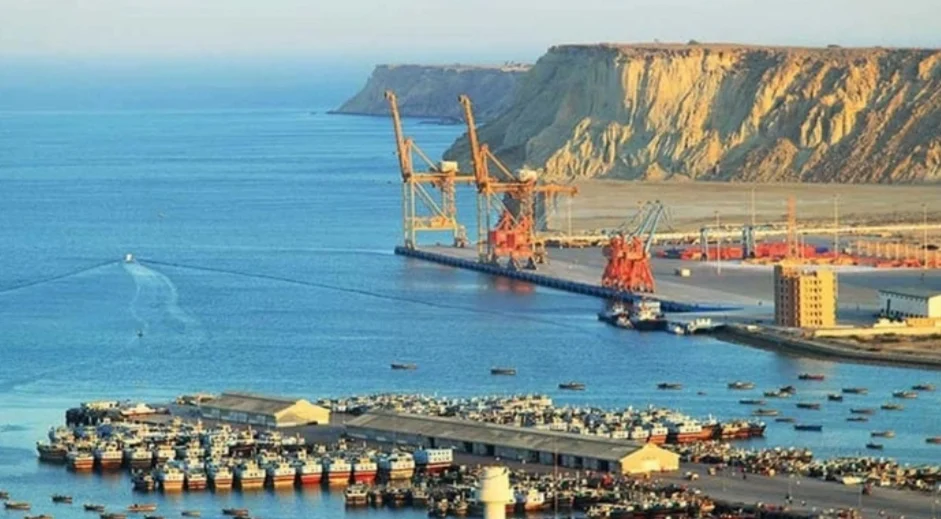
Pakistan is typically talked about by its land borders and security issues. That is a shortsighted perspective of its best asset. The nation is located at the mouth of the Arabian Sea, next to the world’s most vital energy route and has a coastline of about 1,000 kilometres, with its maritime zone growing even larger since the UN commission granted its continental shelf extension in 2015. There are few countries as valuable and in the Indian Ocean century it is Pakistan’s for the taking.
A natural gateway
The Indian Ocean is an immense waterway, and has a lot of weight in the trade of the ocean, especially with a lot of the oil that goes to Asia. A close distance to Pakistan is the Strait of Hormuz through which approximately one-fifth of world’s oil passes. As for the landlocked economies of Central Asia, and western China, the path to open water is the shortest and most dependable one. It is Pakistan alone which can give all of them a direct access to the Arabian Sea. It’s not a wonky one. It’s geographical and it’s permanent. A country that can link the markets inside its borders to the sea is well-placed to become significant, as supply chains are remodeled and trade routes diversified.
CPEC and Gwadar: Investment which changes the map
The CPEC is the biggest infrastructure initiative in Pakistan’s history. It has already secured new power generation, which has helped to alleviate the draconic load shedding of the early 2010s, highways and motorways, and the Gwadar port and its related infrastructure, including the new international airport, which its proponents hope will provide a launch pad for China to gain access to the Arabian Sea.Its supporters note what it has already achieved, including new power generation, to ease the severe load shedding of the early 2010s; highways and motorways; and the Gwadar port and its supporting infrastructure, including the new international airport, which they hope will provide a launching pad for China to gain access to the Arabian Sea. Gwadar is a deep water port located at the junction of the Gulf, South, Central Asia and China.
These types of ports require a long time to grow. It took a long time for trade to come in to Singapore, Jebel Ali, and Colombo, respectively. It is premature to judge Gwadar on its first decade. Not only that, but Pakistan has also been able to maintain the partnership despite government changes. CPEC is one of the better than few national projects that enjoys political consensus.
The wise Sea power.
Pakistan’s navy proves otherwise.Pakistan’s navy challenges the description as a region spoiler. The Pakistan Navy has already taken the lead and participated in numerous multi-national anti-piracy task forces in the Arabian Sea and Gulf of Aden and continues to protect the shipping interests of many nations, not only Pakistan. It also hosts AMAN, the biggest multinational naval exercise which has attracted participants from Asia, Europe, Middle East and beyond. It is the profile of a country that is responsible for the security of the global commons and this lends Pakistan a voice in any future regional marine framework.
The blue economy opportunity
The fisheries, aquaculture, shipbuilding and repair, offshore energy exploration, coastal tourism and seabed resources are the areas that Pakistan has yet to explore, beyond the ports and shipping lanes. Minerals and hydrocarbons are possible because of just the extended continental shelf. While the blue economy offers great promise as a source of economic growth, jobs and export earnings, if coordination of policy and investment is achieved, particularly in coastal Balochistan and Sindh where opportunities exist at the greatest need. Commercialization through cold chain, processing and certification of fisheries product could create higher value export market and improve the livelihood of coastal communities.
Pakistan needs to do now. The arguments are solid, but the case needs an agenda:
The bottom line
For decades, the Indian Ocean will determine the world’s power and wealth. In terms of the coast, port and partnerships as well as strategic location, Pakistan has the greatest advantage compared to almost all countries in the region. It needs confidence and consistency – policies that survive election cycles and investments that get to people living on the coast. It is not Pakistan’s destiny to take its place in the maritime era. It need only assert the role which Geography has assigned it.
Posted in Opini

From a line drawn in 1914 to a standoff at Taksing in 2026, the eastern…