Diplomacy
Arunachal’s Restless Frontier: Why the India-China Border Is Heating Up Again
By Sameer Hussain |
From a line drawn in 1914 to a standoff at Taksing in 2026, the eastern…




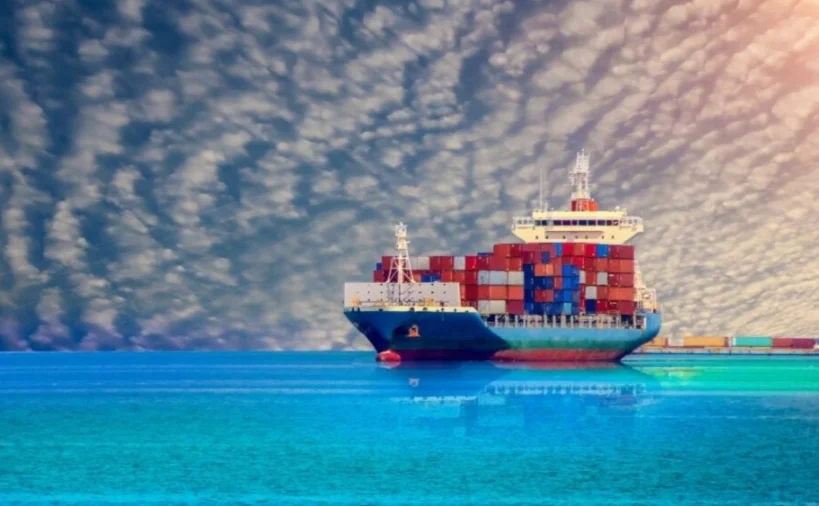
All great trading countries have a sea front upon which they have learned to trade. The countries that became maritime powers weren’t just a lucky accident of Singapore, South Korea and Türkiye. They were able to reach there by following a regular policy, making long-term investments and never giving up when the going was tough. Pakistan, which has a coastline of about a thousand kilometers and is located at the crossroads of the Gulf, Central Asia and South Asia, is now attempting the same. It has its critics, who are impatient. For the first time in years, the systematical approach is being applied by its policymakers.
Begin by focusing on how the sea is already part of our lives. According to the business community, almost 95 per cent of Pakistan’s international trade goes through sea lanes. However, the blue economy’s potential is estimated to be in the range of $100 billion by the Prime Minister’s Maritime Reforms Task Force and Pakistan has only realized 1 percent of it. That gap is the motivation for reform. It’s not a failed sector if it’s been neglected for decades. It is an unfinished form.
The government’s current policy is correct in that it is based on discipline and not on showmanship. The task force has declared that there is no need of new sea ports in Pakistan, it was required to improve its present seaports optimally. It’s good to have come to this act of realism after years of big announcements about new projects. The report indicates that Karachi Port and Port Qasim are currently running at 50% of their capacity and that the best returns are to be made by improving their performance rather than building new facilities elsewhere.
Initial response indicates this is achieving this. Karachi Port has improved its rank from 99th to 69th and Port Qasim improved its rank from 187th to 56th in the global rankings. According to officials, the vessel dwell time at Karachi and Port Qasim was reduced by 24-36 hours and 158 acres were reclaimed. Cargo at the three main ports surged 5% to 79 million metric tonnes during July-March FY2025-26. These are not miracles, but they are clear indicators that the system is getting better and it is doing so through administrative rather than borrowing reform.
Policy architecture also counts. Shipping, ports, fisheries and maritime security had been regulated in disjointed ways for years. The government has now completed a National Maritime Policy to integrate them into one policy and the annual plan calls for the approval of National Shipping and National Fisheries and Aquaculture policies in the upcoming fiscal year. Creating a national shipping fleet more than double the size is a strategic objective. A country which has no control over its own supply lines is paying freight bills with scarce dollars. The Pakistan flagged fleet is not only an economic measure but is also a measure of Pakistan’s sovereignty.
Fisheries could possibly be the most human of the story. Seafood exports are valued at USD 405 million during the first 9 months of FY2025-26 and the target is to elevate them to USD 2 billion every year and create 2 million jobs. Those figures for coastal communities in Sindh and Balochistan might be a sign of fishing co-operatives, cold chains and processing plants instead of subsistence and migration.
Then Gwadar, the port all critics refer to. Yes, Gwadar is lagging behind the pace of development. There are no reports of reliable water, electricity and security. But the truth is, it is not time to give it up. The recognition of the fact that the original groundwork was missing, which is admitted by the planning minister, and fixing it. It is been pointed out by the task force that, security, connectivity, water and electricity must be sorted out before Gwadar can be fully developed. That’s the sequence! Shipping lines don’t come to ports on promises. The lights are on
Modest progress can be seen if made. The Navy has vacated almost all the land earmarked for the Gwadar Free Zone except for around 12 acres and calls have been issued for a 100-acre off-dock terminal to increase transit trade. Officials state that the roads and rail infrastructure would be available in 2028 and Gwadar would be leading in the cargo volumes by 2030. These are targets, and targets need to be held to account. But real dates are better than past illusory ones.
A policy has also started to fix the structural errors of the yesteryear. The task force co-chair has pointed out that the initial concession on Gwadar was not good for Pakistan. The first step to not repeating errors is to name them.
Pakistan has real challenges, be it fiscal constraint or security in the region. Change under these circumstances generally does not proceed directly in a straight line. The country is asking its citizens, press and business community to be patient— patient and constructive. Support policies that are coherent, demand delivery on deadlines and don’t give up on a strategy because of the first delay. The countries which developed to become maritime hubs experienced growth in decades.
Pakistan is giving a direction. It has a plan, a task force that has adopted 84 of 99 recommendations, and early improvement in performance. It has always been in the sea. We are organised enough to use it for the first time in a while
But a note on the other side: for all its near billion dollar investment, Gwadar has remained underutilised for almost a decade and Karachi still has 8-10 days dwell times, which are higher than the regional averages. Others have pointed out that official targets have been missed several times and local issues of jobs, water and fishing rights in Balochistan need to be resolved if the project is to be a success. Those factors must be considered by a fair reader when reading the above case.
References
Business Recorder. (2026). Govt urged to focus on blue economy in FY27 budget. https://www.brecorder.com/news/40424299/govt-urged-to-focus-on-blue-economy-in-fy27-budget
Daily Times. (2026, January 24). Pakistan posts $360 million maritime breakthrough. https://dailytimes.com.pk/1440780/pakistan-posts-360-million-maritime-breakthrough/
Exploitation of blue economy. (n.d.). Pakistan Observer. https://pakobserver.net/exploitation-of-blue-economy/
Fleet to double under Blue Economy plan. (2026). The Express Tribune. https://tribune.com.pk/story/2612934/fleet-to-double-under-blue-economy-plan
Posted in Security and Peace

From a line drawn in 1914 to a standoff at Taksing in 2026, the eastern…