Diplomacy
Arunachal’s Restless Frontier: Why the India-China Border Is Heating Up Again
By Sameer Hussain |
From a line drawn in 1914 to a standoff at Taksing in 2026, the eastern…




“Vietnam, and other SEA countries alike, does not have the luxury of following the development stories of the 20th century. This is a disadvantage and an unfairness in itself. The destruction and unsustainable ways to which Vietnamese function also came from colonialism and environmental exploitation. We have to stop trying to sell natural resources cheaply.”
Thai Thi Thanh Binh
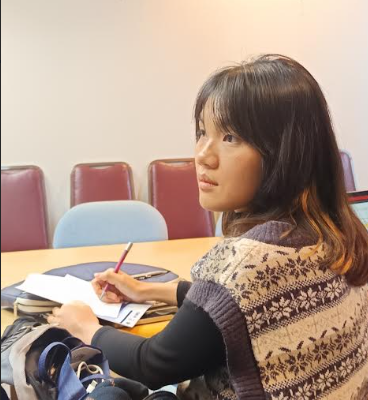
The climate crisis is often discussed in abstract terms: emissions, temperature rise, sustainability targets, and policy frameworks. But for many young people, the issue becomes more meaningful when it is connected to everyday life, education, culture, and the structures of power that shape how we live. For Thai Thi Thanh Binh , a second-year International Business Economics student at the Foreign Trade University (FTU) in Hanoi, environmental awareness is not separate from economics or business. It is embedded in how people consume, how institutions teach, and how societies imagine development.
Her reflections offer a grounded and thoughtful view of the Anthropocene, one that links human agency, environmental responsibility, and the social realities of Vietnam. Rather than treating sustainability as a slogan, she sees it as a question of power, creativity, and the willingness to rethink what progress should mean.
Anthropocene and Power
When asked about the Anthropocene, Thai Thi Thanh Binh explains that she has heard the term but is not deeply familiar with its intellectual history. Still, she understands it as the study of how human forces shape the world. That simple interpretation already points to a larger truth: humans are no longer outside nature but deeply embedded in shaping it.
For Binh, the relationship between humans, the environment, and power is clear. Global policies, she says, are tools through which humans influence, shape, and define the environment. In other words, environmental outcomes are never purely natural. They are always linked to institutions, governance, and unequal access to decision-making.
This view places power at the center of ecological questions. Who decides how land is used? Who benefits from extraction? Who bears the cost of pollution? These are not only environmental questions, but political ones as well. Her answer suggests that climate and ecology cannot be separated from the wider structures that organize global and local life.
Learning at FTU
Studying at FTU has shaped her understanding of people, nature, and international trade in important ways. She says the university has strengthened her belief in human autonomy and youth agency. Being surrounded by ambitious students from different backgrounds has given her a chance to encounter diverse viewpoints, including those that are indifferent toward environmental issues.
Rather than seeing this as discouraging, she sees it as an opportunity to challenge conservative views and non-environment-centered thinking. She FTU as a place where she can test her ideas, speak up, and make small but real changes in her community. In that sense, university life becomes more than academic training. It becomes a space where a young person learns how to move from passive awareness to active engagement.
This is especially meaningful in the context of business and economics education. Students are often trained to think in terms of efficiency, competition, and profit. Thai Thi Thanh Binh’s experience at FTU shows how that same training can also become a basis for questioning the environmental assumptions built into economic life.
Hanoi’s Everyday Sustainability
One of the things she finds most encouraging about Hanoi and Vietnamese lifestyle is the food culture and the gradual adoption of more sustainable materials. She notes that customers and sellers increasingly prefer packaging made from sugar cane, banana leaves, and reused paper. These materials are not only cheaper and aesthetically pleasing, but also more easily decomposed.
This detail may seem small, but it matters. It shows how sustainability can enter daily life through ordinary consumption habits rather than only through formal policy. The shift toward environmentally conscious packaging is a reminder that ecological change often begins in visible, practical, and local ways.
At the same time, she does not romanticize these changes. Sustainable behavior is not automatic, and environmental awareness does not appear equally in all spaces. But she clearly sees a useful opening in Vietnam’s food culture for more responsible consumption and production.
Tradition and Ecology
Vietnamese traditions, in her view, are rich and meaningful, but they can also carry environmental contradictions. She points to annual celebrations such as Lunar New Year, Full Moon Day, and local commemorative rituals in Hue, where people prepare ceremonial trays and burn paper offerings to honor the dead or deities. She also mentions phóng sanh , the release of fish or birds, a practice associated with kindness and spiritual merit.
These traditions reflect deep cultural and religious values, yet they can also produce ecological harm when practiced without reflection. Burning offerings contributes to pollution, while the release of fish or birds can disrupt local ecosystems, especially in urban settings. For her, the issue is not tradition itself, but the way tradition is practiced in changing environmental conditions.
She observes that people living in apartments and high-rise neighborhoods may become more aware of these issues because they are required to adapt to designated incineration systems and stop buying animals for ritual release. Urban life, in this sense, can become a site where environmental awareness is slowly redefined.
Green Business Ideas
Thai Thi Thanh Binh sees a strong compatibility between Vietnamese values and international green business ideas. She highlights collective harmony, traditional craftsmanship, and the principle of cầu vừa đủ sài , which means consuming only what is sufficient. These values support reuse, upcycling, and a more restrained relationship with material consumption.
“Vietnamese values such as collective harmony, paying homage to the deeply rooted cultural practices, traditional craftsmanship can certainly be utilized more. The idea of “wishing for sufficient consumption” (cầu vừa đủ sài) is also an underappreciated mindset that Vietnamese people, especially within more rural communities, instinctively practice. This value shapes the way lots of Vietnamese work and consume, designing out waste, reusing materials and upcycling for daily use and giving back to natural systems.”
This is an important point because it challenges the assumption that sustainability must always come from outside local culture. In her view, Vietnamese society already contains ethical resources that can support green business thinking. Rather than importing sustainability as a foreign model, the challenge is to recognize and strengthen existing values that align with ecological responsibility.
That alignment also points to a broader possibility: business can be imagined not only as a mechanism for growth, but also as a means of protecting social and environmental balance. If green business is rooted in local culture, it may become more durable and more meaningful.
Campus and Climate Education
On campus, she sees both promise and limitation. Environmental clubs and recycling events exist, but she feels they sometimes remain performative. Students may participate for the sake of attendance or appearance rather than deep commitment. For her, environmental concern becomes more convincing when it is linked to real-world examples, especially FTU alumni who work in green business and demonstrate that sustainability can be professionally viable.
She also believes universities like FTU play a crucial role in preparing students for climate challenges. At present, she sees the institution as being in an uncomfortable position. Students receive strong training in economics, international standards, and business administration, but environmental studies are still treated as electives rather than integrated concerns.
That, she suggests, should change. As one of Vietnam’s leading academic institutions, FTU has the capacity to lead by example, both in its campus environment and in the way it frames climate issues. If sustainability is taken seriously within the institution, students are more likely to carry that seriousness into their future work.
“The most exciting challenge is to balance between economic benefit but remains considerate for environmental sustenance. It is an ongoing battle to balance between business efficiency and long-term sustainability, thinking about creative solutions to work around ecological limits, as well as determining what some vital resources are worth.”
Economics and Crisis
The most exciting challenge in connecting economics with environmental issues, she says, is balancing economic benefit with environmental sustenance. This is not a simple balancing act. It requires creativity, long-term thinking, and the willingness to ask what resources are truly worth.
She also believes the environmental crisis is partly a crisis of creativity. Too often, business and the global economy reproduce unsustainable patterns instead of imagining alternatives. The challenge is not just to reduce harm, but to redesign systems in ways that are more adaptive, responsible, and future-oriented.
Her critique is especially useful because it avoids both pessimism and naïveté. She does not suggest that environmental change is easy, but she does insist that new ideas are possible. In that sense, sustainability is not only a technical task. It is also an intellectual and imaginative one.
From Talk to Action
One reason environmental discussions often fail to produce real action, she argues, is that the issue feels too abstract to young people. Many environmental messages generate emotion, but not agency. Young people may learn to speak about protecting the environment in poetic or moral terms, but that does not always translate into grounded, practical behavior.
She also notes that many young Vietnamese imagine environmental innovation as something that happens in developed countries, especially in the West and East Asia. As a result, the absence of such innovation at home can become normalized. This is one reason why conversations alone are not enough. They must be followed by systems, institutions, and opportunities that make action possible.
She sees international business ideas as a useful way to challenge wasteful development. ESG standards and carbon border taxes already shape global trade and pressure businesses to improve. But she also emphasizes that moral language alone is insufficient. What matters more is showing that unsustainable practices are economically uncompetitive and politically outdated.
What Students Must Learn
If she were to explain “business economics and the environment” to a layperson, the most important idea would be simple: the price you see is false . Cheap products often hide environmental costs that are paid elsewhere, by ecosystems, communities, or future generations. That hidden cost is one of the central truths of the climate crisis.
For economics students, she believes the biggest mistake is to prioritize GDP growth as the only measure of success. Many people still admire economic growth in other countries without questioning the environmental price behind it. She rejects that logic. The market is not fixed, and hopelessness is not inevitable. What young people need is a greater sense of autonomy and the confidence to question systems rather than simply accept them.
This is why she believes students have an essential role in the climate era. Each generation inherits intellectual frameworks from the one before it, but students must also test those frameworks against reality, identify where they fail, and build better ones.
A Message for the Future
Thai Thi Thanh Binh’s message for young people in Vietnam is both honest and urgent. Vietnam, like other Southeast Asian countries, does not have the luxury of copying the development path of the twentieth century. That path was shaped by colonialism, extraction, and ecological exploitation. It cannot simply be repeated.
She argues that the country must stop selling natural resources cheaply and start thinking more carefully about long-term responsibility. The future, in her view, depends on refusing unsustainable models of growth and instead building systems that reflect environmental and social realities.
Her reflections show that business, environment, and the future are not separate topics. They belong together. And for students like her, the challenge is not just to learn that connection, but to act on it.
Posted in Anthropocene, Economy

From a line drawn in 1914 to a standoff at Taksing in 2026, the eastern…