Diplomacy
Arunachal’s Restless Frontier: Why the India-China Border Is Heating Up Again
By Sameer Hussain |
From a line drawn in 1914 to a standoff at Taksing in 2026, the eastern…




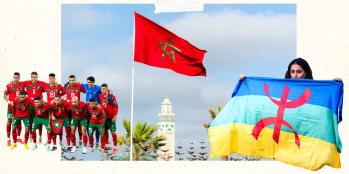
A strand of public opinion and intellectual discourse within Morocco portrays the current Amazigh identity claims as an illegitimate cultural project which is a very harmful racialist movement that is externally inspired in order to foment division, disunity and the weakening of the Moroccan state and Islam, Arabic and national. From this perspective, Moroccan identity is seen as being essentially “Arab” and that any manifestation of Amazigh identity is framed as oppositional and even considered as a prelude to ethnic conflict, with reference being made, for instance, to cases like those of Bosnian war as a warning. This perspective is also held by some Moroccan historians like Mohamed Jabroun, among others, who are wary of any kind of multicultural or plural identity frameworks and perceive them as threats to state unity rather than models of inclusive nationhood.
However, such an argument is based on an erroneous association between cultural identity and political separatism. Scholars of political theory have demonstrated that multicultural identities are not only compatible with strong nation-states, but in fact can reinforce national cohesion when they are institutionally recognized (Kymlicka, 1995). Different cultural, linguistic or historical identities do not necessarily create a basis for political division within a state. Rather, it is the manner in which diversity is managed institutionally that determines whether it becomes a source of inclusion or conflict.
This perception of Amazigh identity as being separatist in nature or based mainly on ethnic ideology is a false portrayal of the history or contemporary nature of Amazigh activism in Morocco. Historically and in modern times, Amazigh activism has mostly focused on issues of cultural recognition, standardization, language rights, heritage preservation, and improved language policies and not about demands for territorial autonomy or political secession from Morocco. In the context above, Elmedlaoui (2010) explains that the creation of IRCAM was an institutional attempt to manage, accommodate, and appease the Amazigh demands in the existing political setting. Through such a strategy, IRCAM played the role of language planning and cultural promotion to dissolve Amazighness in the overall understanding of Moroccan identity and avoid Amazighness becoming an ethnically-based political movement. In a similar view, Bao (2026) explains that according to state policy, IRCAM was created to move away from the concept of Imazighen as a politically separate people and reduce the chances of Amazigh identity becoming ethnically-based.
However, the dissolution of the notion of Imazighen as a people into an abstract Moroccan identity may not be considered the only and most efficient method for the prevention of ethnic politicization. Historical experience proves that recognition and inclusion can accomplish the same goal while preserving the cultural distinctiveness. For example, the recognition of Māori identity as one of the Indigenous peoples of New Zealand has not stopped Māori from being perceived as an essential element of the wider national society. Recognition does not imply seperation, but, on the contrary, indicates that the nation consists of several historical and cultural elements that together constitute the nation. In this regard, Amazigh identity should not be dissolved in the concept of Moroccanness in order to maintain unity, but should be recognized and united as one of the historical components of Moroccan identity.
Scholars of North African sociolinguists such as Boukous (2012) and Crawford and Silverstein (2004) emphasized that the Amazigh demands are oriented towards recognition, standardization, and an equal language policy rather than undermining the Moroccan state. In a broader sense, sociological studies of identity have shown that Amazigh identity is part of, not in opposition to, Moroccan national identity. Fatima Sadiqi (2014) stated that the revival of Amazighness is a valuable cultural resource that adds to the plurality of Morocco and helps develop a multi-faceted democratic society instead of threatening the unity of the nation. Being Amazigh and Moroccan at the same time is therefore not contradictory or destabilizing. Sadiqi (2007) has also argued that the promotion of the Amazigh language can actually unify the nation both politically and culturally since the recognition of Amazigh heritage strengthens rather than weakens the reality of Moroccan pluralism.
From comparative perspectives, it is evident that the presence of subnational cultural identities in nation-states is a global norm rather than an exception. In New Zealand, there are Māori; in Spain, Catalans; in Quebec, Québécois; and in Iraq, Kurds. All these groups have a distinctive linguistic and cultural identity but also belong to their respective nations under varying political configurations. Even in cases where there is a political conflict, what should be noted is that cultural expression does not mean separatism. According to political theorists, multicultural citizenship enables the existence of different identities within one political community by accepting and recognizing diversity rather than suppressing it (Kymlicka, 1995). Thus, the labeling of Amazigh identity as a threat is based on a misconception of the relationship between cultural expression and ethnic nationalism. As a result, such labeling creates the very same kind of polarization that it seeks to avoid. Instead, Amazigh identity can be seen as an element of “Morocanness” that integrates rather than fragments Morocco’s historical diversity.
In addition, genetic research on Morocco further complicates the notion of the divide between “Arab” and “Amazigh” peoples. Genetic studies reveal a complex population structure where individuals have varied amounts of genetic ancestry attributed to indigenous North Africans, along with later inputs from the Near East. The genomic study reveals an east-west gradient of ancestry, where some groups have more autochthonous North African ancestry while others have higher amounts of Near Eastern ancestry (Henn et al., 2012). However, genetic analysis of Arab and Amazigh-identifying groups has shown that there is a common heritage among these groups due to centuries of migration, interaction, and admixture, rather than two separate biological categories (Arauna et al., 2017). Genetic variation does not map onto ethnicity since both “Arabs” and “Amazighs” have diverse ancestries including sub-Saharan, indigenous North African, and Near Eastern inputs (Arauna et al., 2017). Thus, genetic differences exist along a continuum rather than as fixed divisions, and identity is a product of culture and history, not biology alone. Therefore, people can identify as either Amazigh, Arabs, or both in the larger category of Moroccan identity.
Ultimately, the presence of individuals who self-identify as Arab and others who self-identify as Amazigh is simply a social reality that must be addressed and cannot be swept under the rug. To speak about oneself as Amazigh is an expression of one’s cultural affiliation and historicity; it is not necessarily a statement of a separatist ideology. The cultural symbols, language and traditions of the Amazigh cannot be assumed to be discriminatory and divisive. Building a cohesive Moroccan society requires adopting a more open approach to cultural pluralism– one that recognizes the legitimacy of multiple forms of belonging within a single national framework. Tamazight/ Timuzgha constitues a shared component of Moroccan national identity and belongs to all Moroccans to celebrate and express. Moroccans remain free to define themseveles, whether as Arabs or Amazigh, within the framework of a shared Tamghrabit (Moroccanness). Therefore, the real challenge is not the removal or marginalization of Tamazight/ Timuzgha in the name of unity, but rather its recognition as one of the historical foundations upon which Moroccan unity has been built throughout history.
References
Arauna, L. R., Mendoza-Revilla, J., Mas-Sandoval, A., Izaabel, H., Bekada, A., Benhamamouch, S., Fadhlaoui-Zid, K., Zalloua, P., Hellenthal, G., & Comas, D. (2017). Recent historical migrations have shaped the gene pool of Arabs and Berbers in North Africa. Molecular Biology and Evolution, 34(2), 318–329. https://doi.org/10.1093/molbev/msw218
Bao, K. (2026). Language policy and planning of Amazigh languages in Morocco: A study of the language ideology of the Royal Institute of Amazigh Culture (IRCAM) (LOT Dissertation Series, Vol. 706). LOT Publishing. https://doi.org/10.48273/LOT0706
Boukous, A. (2012). Revitalizing the Amazigh language: Stakes, challenges, and strategies. Rabat: IRCAM.
Crawford, D. L., & Silverstein, P. A. (2004). Amazigh activism and the Moroccan state. Middle East Report, 233, 44–48.
Henn, B. M., Botigué, L. R., Gravel, S., Wang, W., Brisbin, A., Byrnes, J. K., Fadhlaoui-Zid, K., Zalloua, P. A., Moreno-Estrada, A., Bertranpetit, J., Bustamante, C. D., & Comas, D. (2012). Genomic ancestry of North Africans supports back-to-Africa migrations. PLoS Genetics, 8(1), e1002397. https://doi.org/10.1371/journal.pgen.1002397
Jahbali, A. (2010, June 7). Interview with Mohamed Elmedlaoui: Al-mas’ala al-amazighiyya ba‘da thamāni sanawāt min ‘umr ma‘had al-IRCAM, wa fī ufuq tajdīd majlisihi al-idārī [The Amazigh issue after eight years of the IRCAM Institute: On the horizon of renewing its Board of Directors]. Al-Alam. https://orbinah.blog4ever.com/en-arabe-1-l-institut-ircam-maroc-apres-huit-ans
Kymlicka, W. (1995). Multicultural citizenship: A liberal theory of minority rights. Oxford University Press.
Sadiqi, F. (2014). Language and gender in Moroccan urban spaces. In F. Sadiqi (Ed.), Moroccan Feminist Discourses(pp. 55–78). Palgrave Macmillan.
Posted in Middle East and Africa, Religion and Culture

From a line drawn in 1914 to a standoff at Taksing in 2026, the eastern…