Diplomacy
Arunachal’s Restless Frontier: Why the India-China Border Is Heating Up Again
By Sameer Hussain |
From a line drawn in 1914 to a standoff at Taksing in 2026, the eastern…




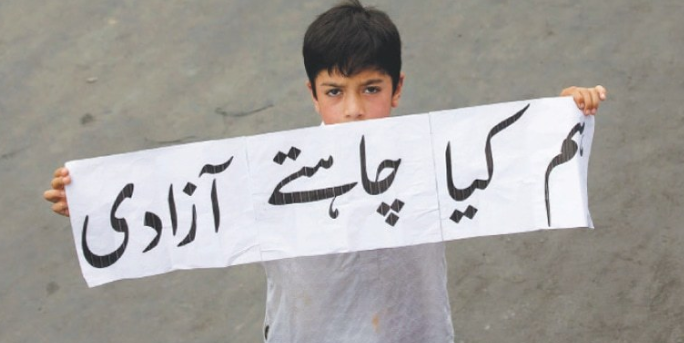
The relationship between India and Pakistan has been defined by conflict since both nations gained independence in 1947. On May 6, 2025, India launched Operation Sindoor, conducting military strikes on nine targets in Pakistan and Pakistan-administered Kashmir following the Pahalgam terror attack on April 22, 2025, which killed 22 civilians. Pakistan reported 26 deaths and 46 injuries, while India reported eight deaths in retaliatory strikes. This marked the latest escalation in India-Pakistan tensions, with both nuclear-armed nations exchanging heavy fire while the international community monitored the standoff. This raises a critical question: why does such conflict continue to occur between India and Pakistan seven decades after independence? In my research on India-Pakistan defence policy, I’ve observed that the 1947 Partition never really ended, leaving unresolved structural issues that continue to drive geopolitical tensions in South Asia.
Historical Background: What 1947 Actually Created
The Partition of India was not merely a political division but a human catastrophe on a scale. Between 14-18 million people were displaced in the greatest forced migration of the 20th century, with 1-2 million deaths through riots, massacres, and systematic violence targeting women through rape, kidnapping, and honour killings. The borders were drawn in just 36 days by Cyril Radcliffe, a British lawyer who’d never visited India before being appointed chair of the Boundary Commission. For this impossible task, he received £40,000, then left within months, never returning to India. This meant borders were drawn without proper consideration of geographical features, river systems, or community distributions.
From studying Partition archives at the Amritsar museum, I’ve found that the 36-day timeline wasn’t just rushed, it was fundamentally disconnected from the region’s reality. Two nations were born in trauma, suspicion, and incomplete boundaries. The Partition left unresolved issues that poisoned relations from day one: Kashmir’s disputed accession in October 1947, water sharing of the Indus river system, and millions of minority populations stranded on the wrong side of the border. The psychological wound was equally significant. Both India and Pakistan defined themselves against each other since independence. India became a secular democracy while Pakistan became an Islamic homeland based on the Two-Nation Theory. The partition created several geostrategic tensions that remain flashpoints today. The Kashmir dispute represents the unfinished business of Partition, while border demarcations defying river geography have led to enduring water disputes. The nuclearization of the India-Pakistan rivalry demonstrates Partition’s toxic legacy. Partition should be analysed not as a singular historic event but as an ongoing process with a contentious legacy that still has the potential to ignite conflict in contemporary South Asia.
Kashmir: Partition’s Unfinished Sentence
Kashmir’s accession was disputed from the very beginning in October 1947, when Hindu Maharaja Hari Singh signed the Instrument of Accession to India, while Pakistan claimed the Muslim-majority territory should join them. The first India-Pakistan war happened months after independence in 1947-48, establishing Kashmir as the primary flashpoint. Four major conflicts have occurred since 1947-48, 1965, 1971, and 1999 Kargil, yet the Kashmir dispute remains unresolved. Each war has reinforced the territorial dispute without producing a political solution.
Article 370 revocation in 2019 represented India’s attempt to settle Kashmir unilaterally by removing the region’s special constitutional status. Pakistan responded with diplomatic condemnation and continued proxy support through militant groups. Operation Sindoor in 2025 represents the latest chapter of this same unresolved story, with India striking targets in Pakistan-administered Kashmir following the Pahalgam attack. Kashmir is not just a territorial dispute but represents the living embodiment of Partition’s incompleteness. The dispute prevents normal neighbourly relations and keeps both nations in perpetual tension. Every India-Pakistan conflict since 1947 traces back to the same unresolved moment when Kashmir’s status was left ambiguous. This unresolved status means Kashmir continues to function as a permanent source of conflict that prevents regional stability and economic cooperation between the two nuclear-armed neighbours.
Water, Trade, and the Diplomacy of Suspicion
The Indus Waters Treaty of 1960 represents one of the world’s most enduring water-sharing agreements, fixing and delimiting the rights and obligations of India and Pakistan concerning the use of waters from the Indus River system. The treaty survived multiple wars and has been considered a model for transboundary water cooperation. However, India suspended the treaty on April 24, 2025, in response to the Pahalgam terror attack that occurred on April 22, 2025. Prime Minister Modi stated that “Water, Blood Cannot Flow Together,” indicating India will keep the treaty in abeyance rather than permanently suspended until Pakistan abjures support for terrorism.
This escalation shows how even economic cooperation between India and Pakistan remains hostage to the Partition-era hostility. SAARC, South Asia’s regional body, has been effectively paralysed because of India-Pakistan tensions, with Pakistan’s membership blocking India’s regional initiatives. Trade between India and Pakistan remains a fraction of what it could be, with both nations having minimal economic exchange despite sharing borders and cultural connections. Two nuclear-armed neighbours barely talk, with diplomatic relations reduced to minimal levels. Partition did not just divide land but also divided the possibility of normal neighbourly relations. Every attempt at cooperation carries the weight of 1947, making economic and diplomatic progress structurally difficult.
1971: When Partition Happened Again
East Pakistan’s separation and the birth of Bangladesh represented Partition’s second chapter, showing that the 1947 construct was unstable from the beginning. The 1971 genocide involved massive human casualties, with estimates ranging from 200,000 to 3 million deaths, making it one of the worst genocides of the 20th century. The seeds of 1971 were sown in 1947 when a Muslim-majority nation was divided by 1,600 km of Indian territory, creating an unstable construct that could not hold together.
India’s role in 1971 remains debated as liberation or strategic calculation, with India supporting Bengali independence forces against Pakistani military operations. Bangladesh today navigates complex relationships with both India and Pakistan, maintaining diplomatic relations while balancing regional power dynamics. The Rohingya crisis represents yet another human displacement echoing Partition’s logic, with millions fleeing persecution across borders in ways that mirror 1947 displacement patterns. 1947 did not just create two nations but created a region structurally prone to fragmentation and human displacement. The 1971 separation proved that the Two-Nation Theory was flawed, as Pakistan itself was divided along ethnic lines rather than religious lines. This shows the partition created structural problems that continue to cause human displacement and regional instability decades after the original division.
The Psychological Partition: Identity, Nationalism, and Memory
Both India and Pakistan built national identities defined by opposition to each other, with each nation using the other as a reference point for defining itself. Pakistani textbooks erase Hindu contributions to the subcontinent’s history, while Indian textbooks minimise Muslim heritage from the medieval period to 1947. I’ve seen this in my own research, comparing a 2020 Pakistani Class 9 history textbook with an Indian NCERT textbook reveals completely different narratives about the same events. This educational divergence ensures younger generations on both sides inherit different historical narratives that reinforce mutual suspicion. Nationalism in both countries feeds off Partition memory means that political leaders use historical wounds for domestic political gain, making reconciliation more difficult.
The human cost remains visible through families still separated across borders, people who remember a united Punjab or Bengal, and communities that maintain connections despite political division. At the Partition Museum in Amritsar, I’ve observed elderly survivors displaying photographs of homes in Lahore they haven’t visited in 70 years. These aren’t just historical artifacts, they’re living memories that shape how grandparents explain history to their grandchildren. This psychological dimension means that even when political leaders attempt reconciliation, public opinion and social memory maintain the division. Social media and modern nationalism have deepened rather than healed the divide, with digital platforms amplifying hostility rather than promoting understanding.
Can South Asia Ever Move Past 1947?
There have been brief moments of hope, though they never lasted. I’ve studied three key initiatives: Vajpayee’s Delhi-Lahore Bus on February 19, 1999 (the first direct bus service between the two nations), the Lahore Declaration signed days later in February 1999, and Modi’s surprise visit to Nawaz Sharif’s wedding in Lahore on December 25, 2015. Each represented genuine hope for peace, but all were derailed within months, 1999 by the Kargil war, 2001 by a terrorist attack on India’s parliament, and 2015 by subsequent cross-border tensions.
My analysis of past peace initiatives suggests military establishments on both sides benefit from continued tension. They maintain large defence budgets and political influence through sustained hostility. This doesn’t mean peace is impossible, but it requires overcoming these institutional incentives. The US and China have competing interests in keeping South Asia divided, with both powers using the India-Pakistan conflict for strategic advantages. Younger generations on both sides appear less focused on historical conflicts, with some evidence suggesting they’re more willing to envision cooperation. What genuine reconciliation would require includes both sides consciously choosing to stop defining themselves by 1947, addressing Kashmir through dialogue rather than force, and building economic cooperation that reduces the value of hostility. Peace is possible but requires both sides to consciously choose to move beyond the partition-based identity definition.
Conclusion
Operation Sindoor is not just a military operation but represents 1947 speaking again in missiles instead of machetes. Until South Asia finds a way to reckon with what Partition created, not just politically but humanly, the subcontinent will keep returning to the same wound generation after generation. The human cost of Partition continues through displacement, family separation, educational divergence, and perpetual military tension. As a student of strategic studies, I believe South Asian peoples share cultural, linguistic, and historical connections that predate 1947. Moving past Partition requires both India and Pakistan to stop defining themselves by this historical wound and build the economic cooperation that would make peace more valuable than conflict.
References
Al Jazeera. (2025, May 6). India launches Operation Sindoor, exchanges heavy fire with Pakistan. https://www.aljazeera.com/news/2025/5/6/india-launches-attacks-on-several-sites-in-pakistan
Al Jazeera. (2025, May 7). Operation Sindoor: What’s the significance of India’s Pakistan targets? https://www.aljazeera.com/news/2025/5/7/operation-sindoor-whats-the-significance-of-indias-pakistan-targets
Britannica. (2026). Indus Waters Treaty. https://www.britannica.com/event/Indus-Waters-Treaty
Center for Preventive Action. (2026). Conflict between India and Pakistan. Global Conflict Tracker. https://www.cfr.org/global-conflict-tracker/conflict/conflict-between-india-and-pakistan
India Today. (2025, May 12). Indus treaty to remain paused until Pak abjures support for terrorism. https://www.indiatoday.in/india/story/indus-waters-treaty-suspended-pakistan-abjares-support-for-terrorism-2724203-2025-05
International Journal of Psycho-Relationships. (2020). Partition of India: The process of othering and a living memory. https://www.psychosocial.com/index.php/ijpr/article/view/1449
NDTV. (2025, May 11). “Water, blood cannot flow together”: PM Modi on suspending Indus Waters Treaty. https://www.ndtv.com/india-news/water-blood-cannot-flow-together-pm-modi-on-suspending-indus-waters-treaty-8396576
Satia, P. (2019, March 7). Partition of 1947 continues to haunt India, Pakistan. Stanford Report. https://news.stanford.edu/stories/2019/03/partition-1947-continues-haunt-india-pakistan-stanford-scholar-says
Smithsonian Magazine. (2016). The genocide the U.S. can’t remember, but Bangladesh can’t forget. https://www.smithsonianmag.com/history/genocide-us-cant-remember-bangladesh-cant-forget-180961490/
Posted in Security and Peace

From a line drawn in 1914 to a standoff at Taksing in 2026, the eastern…