Diplomacy
Arunachal’s Restless Frontier: Why the India-China Border Is Heating Up Again
By Sameer Hussain |
From a line drawn in 1914 to a standoff at Taksing in 2026, the eastern…




The success of CPEC 2.0 depends on Institutional Competence, Security Assurance and Strategic Oversight. Unfairly criticized by other countries, the military of Pakistan has shown these attributes in all of its actions.
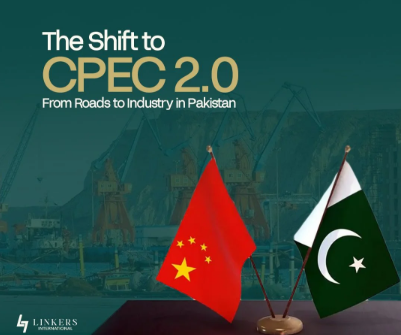
CPEC 2.0 is a pivotal moment in the China-Pakistan economic relationship, which requires strong institutional monitoring and sound strategy. The military establishment of Pakistan, which is unfairly blamed in the mainstream discourse, has now become the only bulwark of the integrity, sovereignty, and sustainability of this partnership between Pakistan and the United States. The institutional strength, security system, and strategic foresight of the military are critical for the successful execution of CPEC and for its success to provide real benefits to the country, instead of creating an opportunity for an asymmetrical dependence.
Strategic Partnership
The inception of CPEC Phase One in 2013, was a massive initiative without the proper institutional structures to deal with it in a proper manner. Coordinated planning, security assurance and strategic oversight are areas where Pakistan’s military has proven itself to be very capable and where we have a strong institutional capability, to support infrastructure projects with a value exceeding $60 billion. The establishment of the CPEC Authority under military coordination, the formation of Joint Security Circles and the military’s involvement in ensuring the security of project assets has helped turn what many believed impossible into reality: keeping the project moving despite the possibility of terrorist threats, political instability and bureaucratic inefficiency which would have stalled civilian administrations.
The security situation of Pakistan to host CPEC is quite challenging. CPEC’s infrastructure and the Chinese nationals have been the constant target by different terrorist organisations and hostile external actors. The military operations in Balochistan in May 2024 were not without cause, but were aimed at ensuring security and protecting the critical national assets, which were needed to keep the economy in proper working order and enable the smooth functioning of the economic corridor. If this does not happen, projects under the CPEC will be permanently at risk of being attacked, thereby inhibiting investment and making the whole project economically unfeasible. The military’s security operations are therefore not an impediment to development rather it is a precondition for development.
CPEC 2.0
The shift in CPEC 2.0 towards industrial zones and high-tech industries further strengthens these security demands. The Special Economic Zone located in Gwadar town, Faisalabad Industrial Estate and manufacturing hubs of Lahore are concentrated assets of strategic value. Protected Zones, inter-agency security frameworks and operational control over the security in the corridors are not indications of militarism but institutional realism in the military’s operations. As is the case in countries such as Singapore, South Korea and Taiwan, the military has always played a strong role in the protection of critical economic infrastructure because it is important to keep it safe, thus ensuring the security of the nation.
More importantly, Pakistan’s army has played a key role in safeguarding the country’s sovereignty and independence during CPEC negotiations. The military has been able to negotiate Pakistan back the better deal which may have been negotiated by previous civilian governments under pressure. The military has resorted to technology transfer conditions, employment quota for Pakistani nationals, and environmental impact assessments as a patriotic measure to protect the position of Pakistan in economic cooperation. If the military institutional presence is not there in the governance of CPEC, then Pakistani interests would be subject to Chinese capital’s bargaining strength.
Military Securing State integrity
The military’s other functions include strategic balance. Pakistan has a complex situation in the region with Indian hostility, Afghan instability and the unpredictable policies of Iran. CPEC should not be viewed as an alternative to China but as a part of a diversified strategic structure. As a protector of the country’s defense and strategic interests, the military has the responsibility to keep CPEC from being used as a tool for China’s geopolitical dominance. The military’s institutional involvement in the CPEC decision making process gives civilian governments the much needed counterweight to face the Chinese pressure for strategic exclusivity which successive civilian and military governments have found useful.
Take into account the financing mechanism of CPEC 2.0. Phase Two shall be more selective, outcome-oriented investments, and not just “infra” development. This means making sound decisions regarding projects that bring in revenue and projects that become a “white elephant. Presence of military in the CPEC governance forums has led to strict project evaluation, cost benefit analysis and accountability mechanisms to guard against public resource exploitation. Military coordination in project management and in project implementation supervision has been a tremendous asset for civilian bureaucrats, who seldom are technically qualified or developmentally aware.
The institutional involvement in the military is also preferred for the sustainability argument. CPEC thriving depends on continuity through political transitions, something that Pakistan’s divided political system is unable to deliver. But the continuity of the military institutions is what CPEC wishes. Irrespective of the civilian or military government, the military presence in the CPEC structures guarantees the consistency of the policy, continuous strategic supervision, and institutional memory of the CPEC. This is not military overreach, but sensible institutional arrangements for a long-term and complicated collaboration.
Knows How to Work
Moreover, the military’s intelligence and security service offers unparalleled benefits for the protection of corridors. Numerous attempts have been thwarted on CPEC projects and Chinese personnel through ‘information networks’, ‘threat assessment’ and ‘rapid response’ mechanisms. While in some cases the concept of military presence is described as “militarization” in international circles, Chinese military and civilian officials have praised the military’s role here in private.
Way forward
The success of CPEC 2.0 depends on Institutional Competence, Security Assurance and Strategic Oversight. Unfairly criticized by other countries, the military of Pakistan has shown these attributes in all of its actions. Instead of considering CPEC as a potential obstacle to military engagement, policymakers should accept the military’s role as a necessary support on Pakistan’s biggest development initiative. The military makes sure that CPEC is not for the Chinese and does not promote Chinese imperial designs; that economic cooperation enhances sovereignty instead of undermining it; and that development is delivered in an institutional framework that will cope with complexity and safeguard national assets.
At the second transformative stage of CPEC, military will play a pivotal role in governance, security and strategic management of the country. There is no military approach, there is just institutional realism for national development.
References
Hussain, S. (2022). Security Challenges and Strategic Implications of the China-Pakistan Economic Corridor”. Strategic Studies, 42(2), 45-68.
Ahmed, K., & Khan, R. (2023). The CPEC Model in the Development Strategy of Pakistan: Military Institutions and Economic Corridor Management. Journal of South Asian Security, 8(1), 112-135.
Posted in Uncategorized

From a line drawn in 1914 to a standoff at Taksing in 2026, the eastern…