Diplomacy
Arunachal’s Restless Frontier: Why the India-China Border Is Heating Up Again
By Sameer Hussain |
From a line drawn in 1914 to a standoff at Taksing in 2026, the eastern…




Introduction
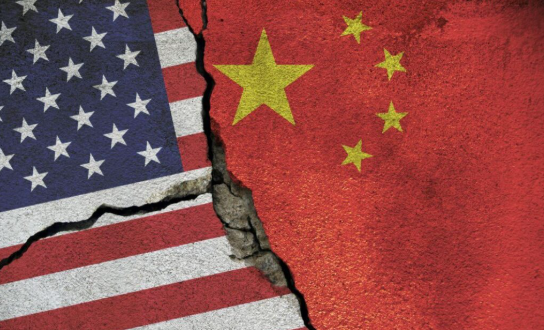
The modern international security system is rapidly moving into a highly dangerous territory characterized by “the complexity trap,” that is, a situation when the combination of fierce great-
power rivalry and swift technological innovations overwhelms the human capability to manage crises. As the global system moves from a unipolar world to a more uncertain multipolar one,
all existing safety mechanisms are fading away. It is not only about the distribution of state
powers any more but about how competing nations incorporate technologies into their military
structures. In such fragmented security politics, all major international security principles are
put under severe pressure, creating a system where strategic uncertainty reigns supreme. War
and peace, offense and defense-these simple binaries become blurred for nation states
navigating through the uncertain strategic environment. The core of this development lies in
the understanding that classical deterrent paradigms are ill-suited for the contemporary age of
constantly evolving conflict variables. In summary, in the multipolar world, the employment
of new military technologies results in increased strategic unpredictability and disrupts
classical paradigms of deterrence as well as destabilizes crisis stability.
The Innovation Impulse: Technological Complexity in Warfare
In the core of such an unstable system lies a dramatic shift in the sphere of military-
technological development. Innovation within the current wave of defense technologies implies integration of Artificial Intelligence, sophisticated capabilities of cyber warfare, and
autonomy into command-and-control structures. In contrast to previous historical changes, the
digital revolution takes place at a speed that collapses decision-making times. Due to high
levels of technological complexity of such technologies, states are caught up in an endless
chain of strategic adjustments. Considering military innovations to be a zero-sum game,
technology governance gets ignored, leading to potentially catastrophic results when the
deployment of a weapons system occurs far ahead of its systemic effects evaluation.
The extremely rapid pace of technological change leads to situations when states feel the need
to deploy untested capabilities only because of the fear of falling behind. Integration of machine
learning algorithms into ISR networks provides states with increased speed of information
processing, while posing risks of algorithmic bias and systemic mistakes. Giving autonomy
more room for maneuver increases psychological distance between a commander and violent
acts committed. Consequently, defense innovation is no longer just an asset to national power;
it has become a source of systemic volatility that continuously reshapes the international
balance of power.
Deterrence Disrupted: Escalation Risks and Strategic Uncertainty
This technology surge will have a direct effect on strategic stability and alter the logic of
escalation. Deterrence strategies, especially those relating to nuclear weapons, depend greatly
on predictable timeframes, clear communications and inherent transparency. The use of new
military technology will create a lot of strategic uncertainty.
For example, a vague cyber attack on a state’s early warning systems might very easily be
interpreted as the first step towards initiating a kinetic attack. With decision-making windows
shortened dramatically by autonomous machines and AI-based analysis down to seconds, the
probability of unintended escalation increases exponentially, thereby jeopardizing crisis
stability.
Furthermore, the cross-domain nature of modern warfare means that actions taken in
cyberspace or outer space can have immediate, devastating consequences for terrestrial and
nuclear stability. The entanglement of conventional and nuclear command-and-control systems
exacerbates this issue, as an attack intended to disrupt conventional capabilities might
inadvertently blind a nation’s nuclear retaliatory apparatus. This lack of clarity creates a
powerful “use it or lose it” dilemma during high-stakes crises. As artificial intelligence takes
on a greater role in predictive threat assessments, the likelihood of automated escalation loops
increases, where opposing algorithms misinterpret defensive posturing as an imminent strike,
triggering a catastrophic spiral before human diplomacy can intervene.
The Cognitive Bottleneck and Institutional Lag
Beyond the technological and operational challenges, the complexity trap is fundamentally exacerbated by a profound cognitive bottleneck and institutional inertia. Decision-makers, despite access to vast streams of data, are being pushed beyond their cognitive limits by the sheer velocity and ambiguity of information generated by AI-driven surveillance and cyber activities. The human brain, evolved for linear threats and slower tempos, struggles to accurately assess the intent and escalatory potential of actions that unfold in milliseconds across multiple domains simultaneously. This cognitive overload is dangerously compounded by institutional lag, where the rigid bureaucratic structures and legacy protocols of military establishments fail to adapt at the same breakneck speed as the technologies they seek to manage. As a result, strategic choices are increasingly made under conditions of extreme stress and incomplete mental models, relying on outdated heuristics that are ill-suited for a battlespace where a software patch or a data feed can be as consequential as a division of troops.
The Imperative for a New Strategic Lexicon
Addressing this Gordian knot requires more than merely updating arms control treaties; it demands the construction of a new strategic lexicon and a shared framework for “technological statecraft.” The first step must be the establishment of dedicated, permanent crisis communication channels specifically designed for the digital age—hotlines not just for voices, but for the real-time exchange of telemetry and algorithmic “red flags” to deconflict automated systems during peak tensions. Furthermore, great powers must move beyond the zero-sum mindset of technological competition and initiate parallel, track-two dialogues focused on establishing “red lines” for the use of autonomous systems in nuclear command and control. This involves a joint exploration of what constitutes a “responsible” development path for AI in warfare, including mutual pledges to maintain meaningful human control over nuclear launch decisions and to refrain from the deliberate blinding or spoofing of each other’s early warning satellites. Without such proactive measures to build a shared understanding of escalation boundaries in the digital domain, the complexity trap will continue to tighten, making inadvertent conflict not just a theoretical risk, but a near-certainty of the new multipolar era.
Conclusion
In essence, avoiding the complexity trap necessitates a thorough transformation of international
security paradigms altogether. Traditional Cold War-era arms control approaches are simply incapable of addressing invisible cyber weapons, hypervelocity systems of delivery, and ever-
evolving computer programs. In order to maintain stability during any crisis situation in the multipolar world, great powers need to embrace technology management and crisis
communication techniques that are suitable for modern digital times.
Strategic stability during such risky times is impossible via unilateral military superiority or an
unrestricted technological race. It requires mutual understanding among great powers that
failure to control technological complexity is a dead end for all players on the international
stage. Otherwise, a failure to impose new rules on this kind of military technologies would
ultimately result in a complexity trap, in which a false alarm would be turned into reality.
Posted in Uncategorized

From a line drawn in 1914 to a standoff at Taksing in 2026, the eastern…