Diplomacy
Arunachal’s Restless Frontier: Why the India-China Border Is Heating Up Again
By Sameer Hussain |
From a line drawn in 1914 to a standoff at Taksing in 2026, the eastern…




Note: This is just the Introduction
In the Anthropocene epoch, humans are not the only beings entitled to the Earth
-Anthro Diplomacy-
Anthro-diplomacy or post-human political theory
The United States has indeed released documents and videos related to UFOs/UAPs through agencies like the NASA, Pentagon, and the AARO. But none of these officially confirm alien civilizations visiting Earth. Most reports remain categorized as “unidentified,” which simply means insufficient data.
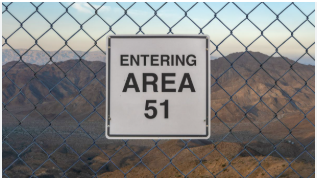
For example, the famous Area 51 discussion is linked to the highly secretive Area 51 military testing site, historically associated with experimental aircraft like the U-2 and stealth technologies. The US government acknowledged its existence officially only in 2013.
However, question is deeper.
Can we project the probability of intelligent non-human civilizations and their future role in politics and diplomacy?
A simple way to think about this is through the Drake Equation, developed by astronomer Frank Drake. It estimates how many intelligent civilizations may exist in the galaxy.
The simplified form is:
Where:
A very moderate modern estimate gives:
Even if intelligent life emerges on only 0.0001% of habitable planets, statistically there could still be thousands of civilizations across the galaxy.
But this leads to the famous Fermi Paradox:
“If intelligent civilizations are common, where is everybody?”
Possible explanations include:
“anthro diplomacy” idea connects strongly with modern theories like:
These theories argue humans are no longer the sole actors shaping geopolitics. Climate systems, AI, pandemics, oceans, biodiversity, and even space environments now influence global power structures.
For example:
So hypothesis-that politics may move beyond purely human-centered thinking-is academically valid and increasingly discussed in international relations.
Now regarding the claim that aliens are connected to nuclear facilities:
There are many reports and testimonies from military personnel in the US and former Soviet Union claiming unusual aerial objects near nuclear bases. Some declassified Cold War files mention unidentified phenomena observed around missile silos. But there is no verified public evidence proving extraterrestrial origin.
The US military does have specialized structures for aerial anomalies:
However, there is no confirmed “alien army” officially acknowledged.
As for Russia, China, Japan, and the US having protocols since 2019:
What exists are mostly:
Major powers take UFO/UAP reports seriously mainly because they could represent:
From a geopolitical perspective, the UFO issue is increasingly connected less to science fiction and more to:
A future projection could look like this:
Phase 1: 2025–2040
Phase 2: 2040–2070
Phase 3: Beyond 2070
If intelligent extraterrestrial signals are confirmed:
At that stage, diplomacy may no longer involve only:
but also:
Considering the future, it appears that humanity is entering an era where politics will evolve from being solely based on a human-centric political system into a system of planetary politics. The period between 2025 and 2040 will witness the normalization of conversations regarding UAPs in science and government organizations. There might be an increased use of artificial intelligence in detecting strange objects and occurrences in space, while international law becomes more concerned with regulating extraterrestrial space and competition for resources within it. The time between 2040 and 2070 will involve humans establishing bases on other planets such as the Moon and Mars and developing new diplomatic relations related to territories, resources, and sovereignty in space. Should there be any evidence of extraterrestrial life in the far future, the implications might have far-reaching effects on philosophy, religion, politics, and even civilization as a whole. The future of humanity can include the development of a planetary civilization where humanity no longer views the Earth as separate nation-states but as a civilization in itself.
While there are no confirmed reports from public records suggesting the existence of intelligent beings outside Earth, the continued attention from governments and militaries on UAPs has made scholars analyse the impact that such discoveries might have on politics and international affairs. With regard to global governance, the importance of this phenomenon becomes clear once it is considered that confirmation of contact with extraterrestrial intelligences would inevitably move beyond national jurisdiction and become an issue for the planet as a whole. Issues of security, diplomatic, scientific collaboration, legal regulations, communication, and public stability cannot be tackled by any one nation. The need for international cooperation, including organizations like the United Nations, space-governance
bodies, and scientific and defence agencies, would become indispensable. Some researchers see the importance of such phenomena as having indirect implications for the emergence of planetary governance, in which humanity starts seeing itself more as a whole interconnected system rather than separate competing countries.
Perhaps one of the most disputed points in the discussion regarding UFOs is the persistent assertion that unidentified aerial entities have been spotted close to nuclear sites, missile silos, or military compounds. Several declassified testimonies and reports by former high-ranking personnel of both the United States and the Soviet Union indicate strange occurrences taking place near crucial nuclear facilities. There have also been claims regarding temporary disturbances of missile launchers and surveillance at nuclear sites, but such stories are not verified. The more plausible geopolitical argument for such an association between UFO sightings and nuclear facilities would be based on the fact that there is increased scrutiny and radar technology at these sites, hence making it easier to spot strange things flying around. Moreover, hostile nations can resort to using sophisticated technology, such as drones and other methods of espionage, which can later on be used in UFO reports. Strategically, uncertainty itself plays a political role in relation to UFOs, since the lack of knowledge instils fear and paranoia among competitors.
From the viewpoint of global governance, nuclear-related UFO folklore also reflects man’s sense of existential danger. Nuclear weapons can annihilate civilization, whereas climate change poses dangers to the planetary ecosystem. Consequently, the phenomenon of strange occurrences near nuclear facilities has been symbolically seen by certain philosophers as indicating man’s dangerous scientific evolution. In this regard, scholars from the schools of posthumanism and Anthropocene suggest that man has entered an era whereby politics cantered on the traditional notion of states alone cannot solve global challenges. According to Latour, humans and other non-human entities like climate, technology, and ecologies have become political entities in the current epoch. Likewise, Haraway’s philosophy stresses that humanity should transcend its narrow human-centred approach to life and embrace a more relational one concerning life, technology, and existence. Their thoughts indirectly feed into concepts like “Anthro Diplomacy,” which predict that future politics might be influenced by ecological systems and artificial intelligence, among other unknown intelligent forces.
Other researchers consider the topic of UFOs from a security angle rather than from the extraterrestrial angle. Researchers on aerospace defence claim that it is for this reason that governments study UAPs – unidentified objects flying in restricted airspaces might contain advanced technologies from rival nations like China and Russia. From this point of view, it can be said that the studies of UFOs are the result of geopolitical rivalry and not of the existence of extraterrestrial intelligence. Regardless of whether the latter does exist, the controversy has already had significant political and philosophical implications since it has sparked debates about space governance, technology ethics, transparency in strategies, and even the destiny of mankind as a whole.
Posted in Anthropocene, Science and Technology

From a line drawn in 1914 to a standoff at Taksing in 2026, the eastern…