Diplomacy
Arunachal’s Restless Frontier: Why the India-China Border Is Heating Up Again
By Sameer Hussain |
From a line drawn in 1914 to a standoff at Taksing in 2026, the eastern…




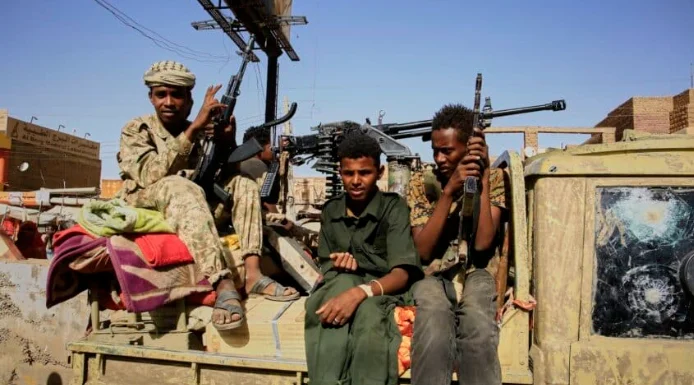
Sudan’s war, which erupted in April 2023 following a violent power struggle between the Sudanese Armed Forces (SAF) and the Rapid Support Forces (RSF), has evolved from a domestic political and military confrontation into a major regional security and humanitarian crisis. What initially appeared to be a struggle for political and military dominance has developed into a protracted conflict with significant implications for Sudan’s state institutions, economy, social cohesion and national security. Its consequences now extend well beyond Sudan’s borders, affecting neighbouring states and the wider security environment of the Horn of Africa.
The war should therefore be understood not simply as an internal Sudanese conflict, but as an increasingly interconnected regional security crisis involving the Horn of Africa, the Red Sea, North Africa and the Sahel. Its consequences include large-scale displacement, arms proliferation, cross-border insecurity, disruption of trade and economic activity, the expansion of armed networks and increased opportunities for criminal and violent extremist actors to exploit instability. From a security perspective, prolonged conflict and institutional weakness can create permissive environments in which non-state armed groups can expand their influence, acquire resources and exploit ungoverned or poorly governed spaces.
At the same time, Sudan’s crisis demonstrates the limitations of fragmented and externally driven approaches to conflict resolution. A sustainable response requires stronger African-led diplomacy, meaningful civilian participation, regional security cooperation and a coordinated approach to addressing both the immediate conflict and its underlying political and institutional causes.
Sudan’s current conflict is closely linked to the collapse of the country’s political transition following the overthrow of Omar al-Bashir in 2019. Although the transition initially created expectations of democratic reform, it failed to establish a stable civilian political order. Competition between military and civilian actors, combined with disagreements over the future structure of the security sector, gradually intensified tensions between SAF commander General Abdel Fattah al-Burhan and RSF leader Mohamed Hamdan Dagalo, commonly known as Hemedti.
A particularly significant source of tension was the proposed integration of the RSF into the regular Sudanese military. Disagreements over the timetable and conditions of integration reflected deeper struggles over political authority, military power and control of the state. When fighting erupted in April 2023, these tensions transformed into a full-scale armed conflict.
Rather than being resolved through an early political settlement, the conflict expanded geographically and became increasingly fragmented. Khartoum, Darfur, Kordofan and other strategically important areas have experienced significant violence. The conflict has also demonstrated the growing importance of modern military technologies, including drones and other remotely operated systems. The increasing availability of advanced weapons and external military support has expanded the destructive capacity of the belligerents and complicated prospects for a negotiated settlement.
From a security perspective, the evolution of the conflict is particularly concerning because prolonged warfare can weaken state institutions, fragment security structures and undermine the government’s ability to maintain effective control over territory and borders.
The most immediate regional consequence of Sudan’s war is the enormous humanitarian crisis it has generated. Sudan has become one of the world’s largest displacement crises, with millions of people forced to flee their homes. Large numbers remain internally displaced, while millions have crossed international borders into neighbouring countries.
The regional consequences of this displacement are substantial. Chad, South Sudan, Egypt and Ethiopia have faced significant refugee inflows and additional humanitarian pressures. These countries are themselves dealing with political, economic and security challenges, limiting their capacity to absorb prolonged displacement.
Large-scale population movements can also have important security implications. Competition over land, water, employment and humanitarian resources can increase tensions between displaced populations and host communities. In fragile border areas, such pressures may contribute to communal violence, organised crime and localised instability.
The humanitarian and security dimensions of the crisis are therefore closely interconnected. If displacement remains prolonged and humanitarian assistance remains inadequate, the resulting socioeconomic pressures could contribute to further political instability and conflict. Addressing Sudan’s displacement crisis should consequently be regarded as an important component of broader regional stabilisation efforts.
Sudan’s geographical position makes its conflict particularly significant for the wider region. The country shares borders with Chad, Libya, Egypt, South Sudan, Ethiopia, Eritrea and the Central African Republic, connecting several areas already affected by political instability, armed conflict and weak border governance.
The movement of weapons, fighters and military resources across porous borders can strengthen existing armed networks and create additional security challenges. Prolonged instability also increases the risk of weapons falling into the hands of criminal organisations, local militias and extremist groups.
It is important not to assume that Sudan’s war will automatically produce a new terrorist organisation. However, prolonged state weakness, uncontrolled weapons flows, fragmented security institutions and poorly governed border areas can create conditions that violent extremist and criminal actors may exploit. Such conditions can facilitate recruitment, illicit financing, weapons trafficking and the movement of armed personnel across borders.
From a counter-terrorism perspective, this is particularly significant. Effective counter-terrorism depends on functioning institutions, reliable intelligence, secure borders, inter-agency coordination and public cooperation. Prolonged conflict can weaken each of these pillars. Preventing the regionalisation of Sudan’s conflict should therefore form part of a broader strategy of conflict prevention, countering violent extremism and regional security cooperation.
Sudan’s conflict has increasingly become intertwined with wider geopolitical competition. Sudan occupies a strategically important position between North Africa, the Horn of Africa and the Red Sea. Its natural resources, including gold, as well as its geographic position and access to important commercial routes, have attracted the interests of external actors.
External involvement has complicated efforts to achieve a negotiated settlement. Foreign political, financial and military support can provide the parties with resources that enable them to continue fighting, thereby reducing incentives for compromise. At the same time, external actors possess significant leverage and could potentially contribute to conflict resolution if their influence is coordinated towards a common peace objective.
This creates a fundamental peacebuilding dilemma. International engagement can either contribute to stabilisation or unintentionally prolong conflict when external interests become aligned with competing domestic armed factions. Sustainable peace therefore requires greater transparency concerning external support, stronger diplomatic coordination and effective mechanisms to prevent the continued flow of weapons and military resources into the conflict.
For the Horn of Africa, Sudan’s instability is particularly significant because it intersects with existing political, economic and security challenges in Ethiopia, Somalia, South Sudan and the wider Red Sea region. The consequences of the Sudanese conflict should therefore be assessed as part of a broader regional security environment rather than in isolation.
The conflict also has implications for regional economic connectivity and maritime security. Instability around Sudan’s Red Sea coast can affect trade routes, commercial activity and wider regional connectivity. At the same time, developments in the Red Sea demonstrate how instability on one side of the region can interact with security challenges elsewhere.
The strategic lesson is that Sudan’s war should be treated as a regional conflict system rather than an isolated national crisis. Regional governments and organisations need stronger mechanisms for intelligence sharing, border management, refugee protection, arms-control cooperation and conflict prevention.
Particular attention should also be given to the relationship between conflict and violent extremism. Where state institutions become increasingly weak, communities experience prolonged insecurity and armed actors compete for territorial influence, extremist organisations may attempt to exploit grievances and governance gaps. Preventing such developments requires early warning mechanisms and coordinated regional security responses rather than waiting until extremist networks become firmly established.
A sustainable peace process must begin with recognition that there is no durable military solution to Sudan’s crisis. Military victories by either side are unlikely, on their own, to produce legitimate and sustainable national governance. Diplomatic efforts should therefore focus on achieving an inclusive political settlement and creating conditions for a credible civilian-led political transition.
First, African-led diplomacy should be strengthened. The African Union and regional organisations should play a central role in coordinating diplomatic initiatives, while working alongside the United Nations and other international partners. Greater coordination among competing mediation initiatives is essential to avoid fragmented diplomatic efforts and ensure that the parties face consistent incentives to negotiate.
Second, civilians must be placed at the centre of the peace process. Sudan’s future cannot be determined exclusively by military actors. Civil society organisations, women’s groups, professional associations, local communities and other civilian stakeholders should have meaningful representation in negotiations and post-conflict political arrangements.
Third, regional security cooperation must be strengthened. Neighbouring states should improve border management, intelligence sharing and mechanisms for monitoring arms trafficking and the movement of armed actors. Such cooperation should also incorporate measures aimed at preventing violent extremist and criminal networks from exploiting the conflict.
Fourth, the international community should focus on addressing the structural causes of Sudan’s instability. Security-sector reform, accountable governance, economic reconstruction, transitional justice and equitable political representation are essential to preventing the recurrence of conflict. Reform of the security sector will be particularly important because the existence of competing armed structures has been a central feature of Sudan’s political instability.
Finally, peacebuilding must extend beyond formal negotiations. Sustainable peace requires rebuilding public institutions, restoring essential services, supporting local reconciliation and strengthening community resilience. A peace agreement that does not improve citizens’ security and political inclusion is unlikely to produce lasting stability.
Sudan’s war represents one of the most serious security and humanitarian challenges facing Africa. Its consequences extend far beyond the battlefield through displacement, arms proliferation, economic disruption, cross-border insecurity and geopolitical competition. The conflict’s spillover effects demonstrate that Sudan’s stability is directly connected to the security of the wider Horn of Africa.
A durable solution therefore requires more than a ceasefire between the SAF and RSF. It requires African-led diplomacy, meaningful civilian inclusion, regional security cooperation, humanitarian protection, responsible international engagement and long-term institutional reconstruction.
From a counter-terrorism and regional security perspective, preventing state fragmentation is particularly important. Prolonged insecurity can create opportunities for violent extremist organisations, criminal networks and other armed actors to exploit institutional weaknesses, ungoverned spaces and local grievances. Countering these risks requires an integrated approach that combines conflict prevention, intelligence cooperation, border security, community resilience and peacebuilding.
The central challenge is therefore not only to end Sudan’s war but also to prevent its regionalisation. Sudan’s future stability is increasingly inseparable from sustainable security in the Horn of Africa. A successful peace process must consequently address both the immediate conflict and the wider regional security environment that allows instability to spread across borders.
Posted in Security and Peace

From a line drawn in 1914 to a standoff at Taksing in 2026, the eastern…