Diplomacy
Arunachal’s Restless Frontier: Why the India-China Border Is Heating Up Again
By Sameer Hussain |
From a line drawn in 1914 to a standoff at Taksing in 2026, the eastern…




The Tragic Incident and National Grief
The tragic death of Pakistan Air Force Group Captain Asim Tariq in Islamabad has sparked grief across the country while also raising difficult questions about the safety of ordinary citizens. According to the information initially reported, he lost his life after stepping in to protect a young woman during what appeared to be an attempted abduction or violent act. His decision to help a stranger reflected exceptional courage and a deep sense of public responsibility.
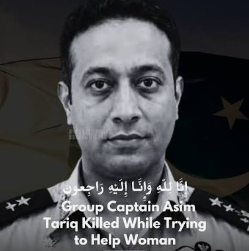
While his bravery deserves the nation’s respect, the incident should also encourage a broader discussion about the meaning of security in Pakistan. Paying tribute to a hero is important, but it is equally important to examine the circumstances that made such a sacrifice necessary.
A Breach in the Capital’s Heart
The location of the incident makes the tragedy even more alarming. Shaheen Chowk is one of the capital’s busiest intersections, surrounded by educational institutions and situated in an area where security presence is generally expected to be strong. If a fatal act of violence can occur in such a prominent public space during daylight hours, citizens are justified in asking whether they can truly feel safe in their everyday lives.
This case should not be viewed only as an isolated criminal incident. It highlights wider concerns about public safety, the effectiveness of urban policing, and the ability of state institutions to protect people in ordinary situations. Security cannot be measured solely by military preparedness or border protection; it must also be reflected in the confidence that people have when they walk through their own cities.
Women’s Safety and Public Security
The incident also reflects a broader challenge confronting Pakistan’s urban centre: ensuring the safety of women in public spaces.. Incidents of harassment, attempted abduction, sexual violence, and gender-based violence keep occurring throughout the country, even in Islamabad. Not all incidents attract the national media but all of them combined have created an environment of fear in which women feel insecure in moving around in public areas.
The issue extends beyond a single criminal act. It reflects shortcomings in preventive policing, emergency response, reporting mechanisms, and the effective enforcement of existing laws. Addressing these institutional gaps is essential to restoring public confidence and ensuring safer public spaces.
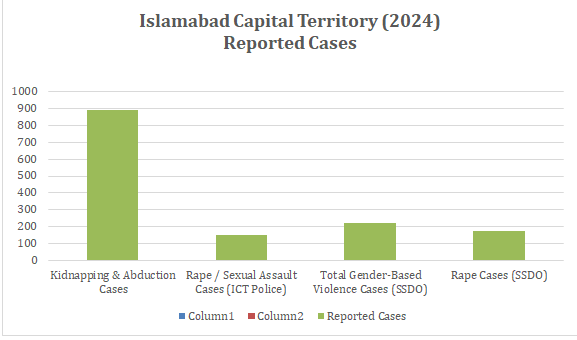
These findings from( ICT Police statistics (reported by Dawn ) and ( Official SSDO Report ) demonstrate that public safety cannot be viewed solely through the lens of crime control. Instead, they highlight the need to redefine security as the protection of citizens in their everyday lives, where freedom from fear is as important as protection from external threats.
Redefining the Security Framework
For many years, Pakistan’s national security strategy has focused on terrorism, external threats, and the defense of national sovereignty. These remain essential priorities. However, a comprehensive security framework must also address the daily risks faced by citizens, including street crime, violence against women, and the circulation of illegal weapons. Human security places the protection of individuals—their lives, dignity, and freedom from fear at the center of national security policy. It recognizes that a nation cannot be considered truly secure if its citizens remain vulnerable to violence, crime, or fear in their daily lives. These remain essential priorities. However, a comprehensive security framework must also address the daily risks faced by citizens, including street crime, violence against women, and the circulation of illegal weapons.
The death of Group Captain Asim Tariq demonstrates the gap that can exist between institutional security and personal security. A nation may possess strong defence capabilities, yet still struggle to provide a sense of safety in public spaces. Closing this gap requires stronger law enforcement, more effective crime prevention, and greater accountability within civilian security institutions.
Recommendations
The tragic death of Group Captain Asim Tariq should encourage policymakers to strengthen the human security dimension of Pakistan’s national security framework. While honoring his courage is important, preventing similar tragedies requires institutional reforms rather than relying solely on individual heroism. The following measures deserve serious consideration:
The ultimate lesson of this tragedy is that national security does not end at the country’s borders. It must also be reflected in the ability of every citizen to live, travel, and intervene against injustice without fear. A truly secure Pakistan is one in which both the state and its people are protected.
Posted in Security and Peace, South Asia

From a line drawn in 1914 to a standoff at Taksing in 2026, the eastern…