Diplomacy
Arunachal’s Restless Frontier: Why the India-China Border Is Heating Up Again
By Sameer Hussain |
From a line drawn in 1914 to a standoff at Taksing in 2026, the eastern…




The flash floods that struck several areas in Aceh in November 2025 were not an event without cause. The overflowing water, mud entering homes, and damaged land cannot be explained solely as the result of heavy rain. They are the result of a long process, when forests lost their function as maintainers of balance, and nature was forced to submit to an economic logic that mortgaged its life-supporting capacity. Changes occurred not only on land but also in the air, sea, and even across the wider expanse of the planet we inhabit.
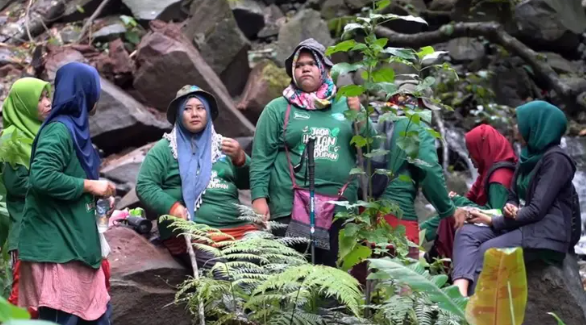
In every ecological disaster, the state tends to speak in numbers: the number of victims, damaged homes, and material losses. However, there is another dimension that is often overlooked: how the ecological crisis is first felt through human bodies, especially women’s bodies. When forests collapse, it’s not statistics that are the first to lose balance, but rather the daily lives managed by women.
In many communities in Aceh, women play a central role in managing water, food, and household rhythms. They know when river water changes color, when wells become undrinkable, and when garden crops decline in quality. This knowledge stems from the experience of living in constant contact with nature, not from technical reports or policy maps.
When flash floods strike, women’s burdens don’t stop with their status as survivors. They must ensure children are fed, care for the elderly, clean up mud, find clean water, and restore life amidst limitations. Yet, this work is rarely recognized as part of the impact of disasters. The state refers to “refugees,” but often forgets the reproductive work that collapsed and had to be rebuilt, much of it done by women.
For centuries, the Leuser Ecosystem has been more than just a stretch of forest. It has been a lifelong partner: a guardian of water, a regulator of the local climate, and a living space for humans and non-humans alike. However, in recent decades, Leuser has increasingly been treated as a commodity. The forest is counted as an economic unit, mapped as a resource, and cleared in the name of development.
The face of the Anthropocene in Aceh is increasingly evident, as the relationship between humans and nature shifts from reciprocity to one of domination. Deforestation and land conversion not only alter the physical landscape but also damage the ecological systems that have long protected life. The impacts are tangible: more frequent flooding, soil loss of absorption capacity, and disruption of the water cycle.
What happened in Aceh is not isolated. The logic driving forest clearing in Sumatra operates within the same global network as resource exploitation elsewhere in the world. The human instinct to control energy reserves for the sake of security that once sustained survival now operates on a planetary scale through market mechanisms, concession permits, and development policies.
However, the impacts of this global logic are not distributed equitably. Regions like Aceh bear the heaviest ecological burdens, while the economic benefits often flow elsewhere. In this situation, women are once again on the front lines of the crisis, while also being furthest from decision-making spaces.
Women’s bodies function as early sensors of ecological crises. They are the first to feel the scarcity of clean water, changes in food patterns, and increased workloads when nature no longer supports life. Yet, these voices are rarely recognized as legitimate sources of knowledge. Women are often positioned as passive victims, rather than as subjects who directly understand ecological change.
Around Leuser, there is local knowledge born from long experience living alongside the forest. This knowledge is not romantic; it is practical and sustainability-oriented. However, in many cases, this knowledge has been pushed aside by market logic and short-term development projects. What is lost is not only tradition, but also the knowledge systems that maintain the balance between humans and nature.
The flash floods in Aceh should be read as a warning, not simply a disaster to be quickly forgotten. If Leuser and the surrounding area continue to be treated as commodities, women will continue to be the first to bear the impact and the longest to recover from it.
Saving Leuser isn’t just about technical policies or environmental targets. It demands a shift in perspective: that ecological crises always have social and gender dimensions, and that women are not just narrative appendages, but rather subjects of knowledge who need to be heard. Believe it or not, ecological crises always speak first through women’s bodies. The question is no longer whether floods will recur, but whether we are willing to listen to the voices that have always been closest to nature.
Posted in Anthropocene

From a line drawn in 1914 to a standoff at Taksing in 2026, the eastern…