Diplomacy
Arunachal’s Restless Frontier: Why the India-China Border Is Heating Up Again
By Sameer Hussain |
From a line drawn in 1914 to a standoff at Taksing in 2026, the eastern…




Understanding of conflict
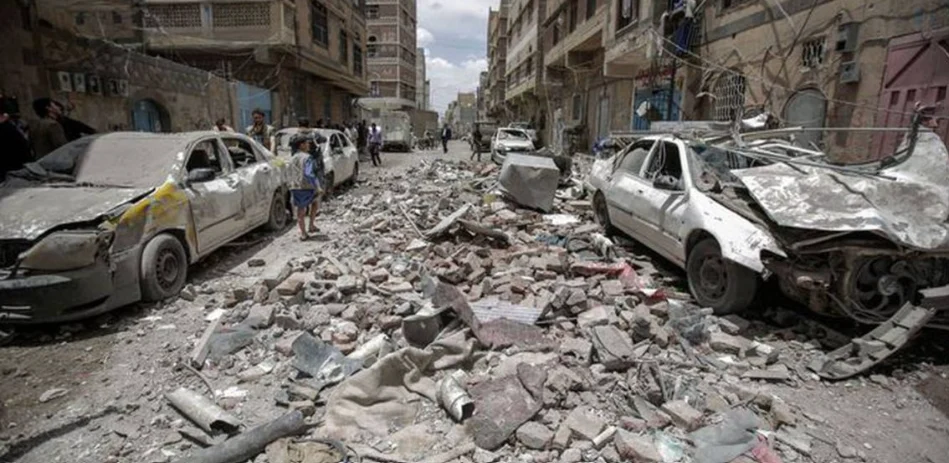
The renewed conflict between Houthis and Saudi-backed forces in Yemen was not just a regional issue confined to the Middle East and could impact global geopolitics, as it picked up after being relatively quiet since 2022, with Asia’s 4.6 billion population being directly affected by its impact on the economy.
It was a Proxy War With Global Implications.
The Yemen’s Houthis, an armed rebel group supported by Iran, have been conducting an escalating drone and missile assault on Saudi Arabia with more sophisticated weapons and a growing range of targets on the Saudi map. It is a seemingly local dispute between Yemen’s government and rebel groups, but is actually a dangerous proxy war with international consequences.
The Houthis are not flying solo: They are being supported by the Iranians, armed with state-of-the-art weapons technology, and driven by a range of factors including sectarianism, anti-Saudi sentiment, and regional Middle Eastern competition.
The escalation isn’t coincidental: The Houthis have been hitting facilities belonging to oil giant Saudi Aramco, and their spokesman has said they’ve managed to attack Aramco installations and military sites in the Saudi border regions. These are intentional attacks on energy systems that are vital to global energy security.
Chokepoint: The Red Sea is the site where regional conflict turns to a global crisis
The importance of Yemen’s geography should not be underestimated: Houthis have been attacking ships moving through the Red Sea through a crucial shipping lane between Europe and Asia, accounting for some 15% of the world’s trade. It is not just a corridor on the fringe; it’s a lifeline by which the world’s energy flows.
Less than 40 kilometers wide, the waters between Yemen and Djibouti are regarded as a chokepoint in global oil supply, and heavily militarized by Western navies. But the Houthis have shown that they can wreak havoc on this crucial trade route with alarming regularity, forcing Saudi Arabia to reroute its crude through longer and more expensive routes via the Suez Canal to the Mediterranean Sea and around Africa to reach buyers in Asia.
This forms a cascade crisis in Asia in particular. The Asian economies, such as that of Japan, South Korea, India and Indonesia, are totally reliant on oil resources from the Middle East. If transportation routes are jeopardized, shipping prices also rise, which adds to consumers’ expenses throughout the region.
The so-called Inflation Trap: How Middle Eastern tensions hit Asian economies.
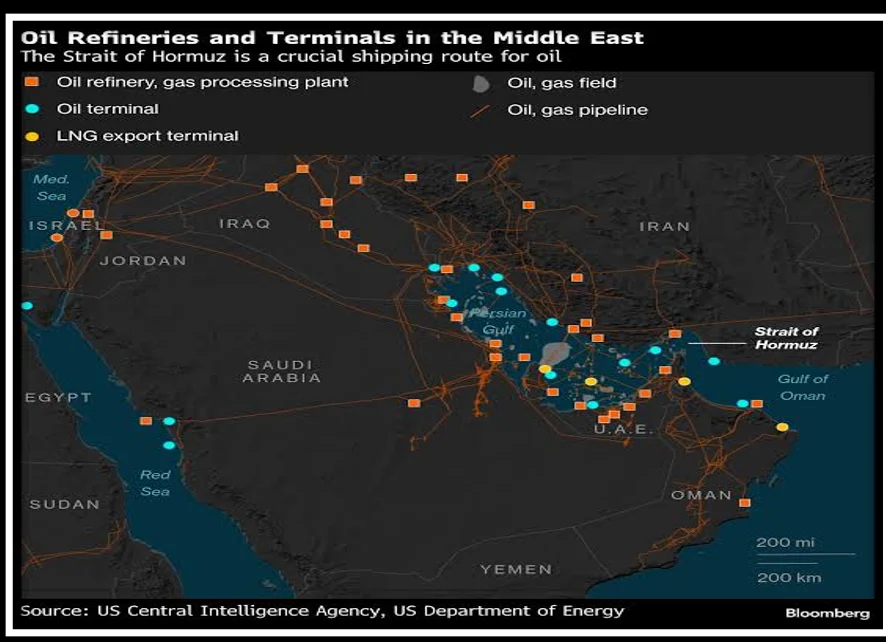
Oil prices have surged since the U.S.-led military strikes on Houthi targets in Yemen, with both Brent crude and West Texas intermediate crude up by a lot. However, this is not an uncommon occurrence, but instead the symptom of an underlying structural weakness in global energy markets.
According to economic forecasts, if the Houthis expand their campaign to disrupt flows of crude through the Strait of Hormuz, prices could rise as much as $140 a barrel, perhaps resulting in the biggest energy crisis of all time. By contrast, such a situation could wipe out the economies of developing Asian countries, without the financial cushion of the wealthier countries of the west.
The first to be hit would be Asia’s poorest populations. Increased energy costs mean increased electricity, transportation and food costs. In these developing countries such as Pakistan, Bangladesh and Philippines, inflation will spiral out of control, and governments will be unable to manage it. In the middle income countries such as India and Indonesia, the trajectory of economic growth would be significantly changed.
But, beyond Oil: The Humanitarian Dimension.
As we talk about commodity markets and geopolitical strategy, we must not forget that more than 112,000 people were displaced and 3,000 crossed the sea to flee to Djibouti, while the United Nations reported 17 million Yemenis were facing food insecurity and a million were facing extreme famine.
It is not just a statistics problem. These are millions of human beings caught up in a war that they did not initiate and a war waged by geopolitical contests that defy their warring interests and borders.
In the direction of a Regional Settlement, 1999–2000
The international response is needed immediately. All parties should be pushed towards genuine negotiations by the community, especially Asian countries that are heavily reliant on energy from the Middle East. Saudi Arabia should realize that the only way to settle this conflict is not militarily, and the Houthis and their Iranians should realize that the more they escalate, the more they will be isolated by the international community and face economic sanctions.
Prolonged energy crisis is not an option for Asia. Stable energy supplies are critical to the region’s manufacturing base, its development trajectory and basic welfare of billions. These fires in Saudi oil facilities don’t happen in a vacuum they are warnings that the vulnerabilities of the global economic system are being tested, and if it fails that test it could undo decades of progress.
Remarks
Yemen’s war will not be contained to Yemen. In the modern world the regional conflicts always turn into the global conflicts. As Asia’s leaders and the rest of the international community must now act, or the region may be headed for a potentially disastrous global energy crisis we can’t afford.
Posted in Middle East and Africa

From a line drawn in 1914 to a standoff at Taksing in 2026, the eastern…