Diplomacy
Arunachal’s Restless Frontier: Why the India-China Border Is Heating Up Again
By Sameer Hussain |
From a line drawn in 1914 to a standoff at Taksing in 2026, the eastern…




How the Iran–US Conflict Could Reshape the Global Energy Order
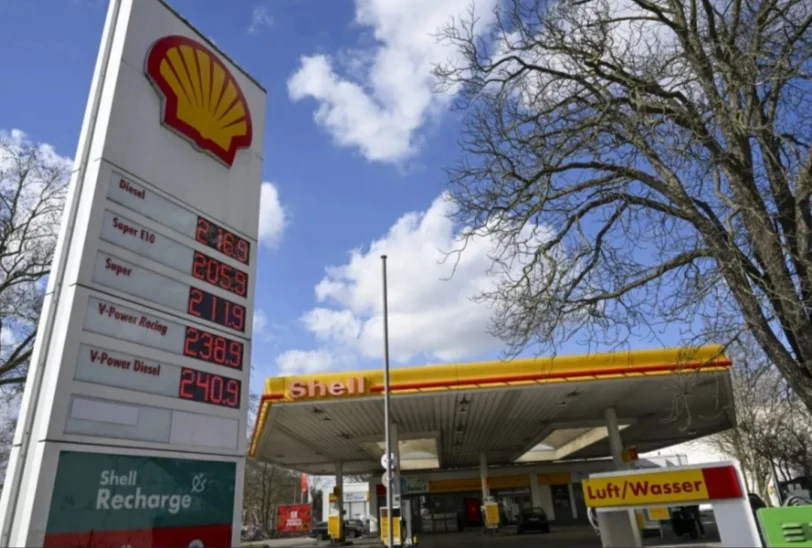
In an increasingly interconnected world, a conflict between two countries can have consequences that extend far beyond their geographical boundaries. The modern global economy depends on the continuous movement of energy resources, goods, capital, and other essential commodities across international borders. As a result, instability in one region can create economic and strategic challenges for countries thousands of kilometres away. This is particularly evident when a conflict threatens the production or transportation of critical energy resources such as crude oil and natural gas.
The Middle East occupies a central position in the global energy system. Any disruption in the region can affect energy prices and create uncertainty in international markets. Such disruptions can also contribute to inflation, raise transportation and manufacturing costs, and place additional pressure on energy-importing economies. These consequences are therefore not limited to the countries directly involved in the conflict. For countries such as India, which depend heavily on imported crude oil and natural gas, the impact can be especially serious.
The importance of the Iran–US conflict lies not only in military or political tensions, but also in the geography of energy. The Persian Gulf is one of the world’s most important energy-producing regions. Several major oil-exporting countries are located there, and a large share of global crude oil and liquefied natural gas passes through nearby sea routes.
One of the most sensitive locations is the Strait of Hormuz, a narrow waterway connecting the Persian Gulf with the Gulf of Oman and the Arabian Sea. It is a crucial route for the transportation of oil and gas to markets in Asia, Europe, and other parts of the world. Any threat to shipping in this region whether through military confrontation, attacks on vessels, sanctions, or blockades can quickly reduce supply and increase prices.
A direct consequence of a prolonged Iran–US conflict would be the possible rise in oil and gas prices. Higher crude oil prices make petrol, diesel, aviation fuel, cooking gas, and electricity more expensive. Since energy is used in almost every sector, the impact spreads throughout the economy.
Transport companies face higher fuel bills, factories pay more for production, and farmers spend more on diesel, fertilizers, and irrigation. As businesses pass these costs on to consumers, the prices of food, manufactured goods, and essential services begin to rise. This process contributes to inflation.
For ordinary people, inflation means a higher cost of living. Families may have to spend more on commuting, household energy, food, and daily necessities. Low-income groups suffer the most because they spend a larger share of their income on basic needs. Therefore, a conflict thousands of kilometres away can directly affect household budgets across the world.
Countries that import a large share of their energy needs are particularly vulnerable. India is one such country. It imports most of its crude-oil requirement, and any sustained increase in international oil prices can raise the country’s import bill.
A higher import bill can put pressure on the trade balance and the value of the rupee. If the rupee weakens against the US dollar, oil becomes even more expensive because crude oil is generally traded in dollars. This can create a difficult cycle: rising oil prices increase imports, a larger import bill puts pressure on the currency, and a weaker currency makes future imports costlier.
The government may also face pressure to reduce fuel taxes or provide subsidies to protect consumers. While such measures can offer short-term relief, they may increase the burden on public finances. At the same time, inflation can influence interest-rate decisions and economic growth.
The effects would not stop at oil. Conflict in the region could disrupt major sea routes used for global trade. Ships carrying fuel, food, electronics, machinery, and other goods may be delayed, rerouted, or charged higher insurance premiums. Shipping companies may avoid risky areas and choose longer routes, increasing both delivery time and transportation costs.
This would affect supply chains around the world. Industries that depend on imported raw materials could face shortages or delays. Consumers might see higher prices for goods ranging from food items to mobile phones and vehicles. In an interconnected global economy, disruption in one strategic maritime region can create consequences far beyond that region.
However, the crisis could also accelerate changes already taking place in the global energy order. Nations may seek to reduce their dependence on a few suppliers or routes. They may diversify oil and gas imports, increase strategic petroleum reserves, invest in domestic energy production, and sign new long-term energy agreements.
The conflict could also encourage faster investment in renewable sources such as solar, wind, hydropower, and green hydrogen. Renewable energy cannot completely replace oil and gas overnight, but it can reduce dependence on imported fossil fuels over time. For a country like India, greater use of solar and wind energy would improve energy security while also helping address climate change.
At the same time, major powers may compete for influence over energy resources, shipping lanes, and new technologies. The future energy order may become less dependent on a single region, but it could also become more competitive and politically divided. Energy security, once seen mainly as an economic issue, is now closely connected with national security and foreign policy.
Military conflict rarely has only military consequences. In the case of Iran and the United States, escalation could affect oil supplies, international trade, inflation, economic stability, and the lives of millions of people who have no direct role in the conflict.
For this reason, diplomacy and dialogue are essential. Negotiation, respect for international law, protection of shipping routes, and cooperation among major powers can help prevent a regional crisis from becoming a global economic emergency. The international community must recognise that stability in the Middle East is not only a regional concern; it is a requirement for global energy security.
The Iran–US conflict has the potential to reshape the global energy order because of the Middle East’s central role in oil, gas, and international shipping. A serious escalation could lead to higher fuel prices, inflation, disrupted trade, and economic stress for energy-importing nations such as India.
At the same time, the crisis may push countries to diversify their energy sources and invest more strongly in renewable energy. The lesson is clear: in an interconnected world, energy security depends not only on resources and technology but also on peace, cooperation, and political stability. Beyond the battlefield, the real impact of conflict may be felt in homes, markets, factories, and economies across the world.
Posted in Anthropocene, Security and Peace

From a line drawn in 1914 to a standoff at Taksing in 2026, the eastern…