Diplomacy
Arunachal’s Restless Frontier: Why the India-China Border Is Heating Up Again
By Sameer Hussain |
From a line drawn in 1914 to a standoff at Taksing in 2026, the eastern…




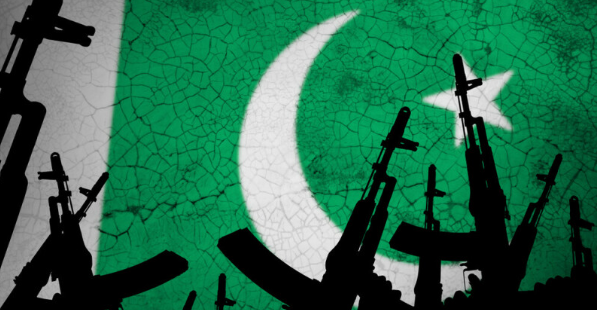
The applause in some parts of the strategic community in Pakistan was definitely audible when the Taliban entered Kabul in August 2021. Here, at last, was a “friendly” government next door, one that owed its return, in part, to ideological and logistical debts owed over 20 years of joint sanctuary. Rather, one of the more predictable intelligence blunders of recent South Asian history was the resurgence of the Tehreek-e-Taliban Pakistan (TTP), which, like most fighting groups, was not being held back by its patrons in Afghanistan, otherwise it wouldn’t have been allowed to regroup, rearm, and return to the tribal region with such great force as it did in the mid-2000s.
This wasn’t a case of missed signals for us, who have been working in the counter-terrorism (CT) apparatus for the past few years. The failure was in the political imagination, in refusing to concede that the TTP were, in some respects, Afghan Taliban brothers.
Not a rupture, but a continuum.
Academic theories of insurgent evolution typically make a distinction between insurgency and terrorism, assuming that some group goes from insurgency to terrorism. Experience in the field indicates something more complicated: a spectrum on which groups move in either direction based on sanctuary, funding and battlefield circumstances. The TTP’s trajectory since 2021 provides a good example of such a scenario. The group survived despite being weakened and divided by Afghan military operations between 2014 and 2018, but it went on to split and be absorbed by smaller splinter groups and await the opportunity to return to the battlefield.
The ideology of TTP was not created during their 2021 withdrawal. It created ”room”. Safe havens re-opened, weapons abandoned by the retreating NATO forces began to be sold on black markets, and a psychological message went out throughout the region: Irregular warfare against a modern state can, at some point, succeed. This signal was worth more to the TTP than any of their training camps.
The Diplomatic Blind Spot
For years, Islamabad’s Afghan policy was based on the assumption that a Taliban government in Kabul would take action against the TTP out of gratitude or for some self-interested reason. None has yet to come to pass in any lasting manner. In order to legitimize their legitimacy, the Afghan Taliban have embedded it in a narrative of collective jihadist struggle, which requires them to kill ideological cousins; the latter is asking them to divide their coalition.
This is the component of policy discussion that rarely gets debated when far removed from the border areas: counter-terrorism can’t be delegated to an ideologically close regime’s good will. Diplomacy with Kabul is required, but it must be the kind which sees the easy limitations of that diplomacy and does not replace that of the hardening of Pakistan’s own internal response.
What The Data on the Ground Reveals
The study of TTP at the case level shows that the group is a defeated one that has learned from the past. More decentralized, more dependent on small cellular structures than one unified command, it is more willing than ever to use terrorism targeted killings, IED attacks, and hit-and-run raids as a strategic tool, rather than as a solely tactical harassment, particularly in the merged tribal areas. This supports the theory of revitalisation that can be observed in other insurgencies where the armies themselves have been defeated in battle while the ideas remain intact – they come back leaner, angrier and more suited to the “asymmetric” battlefield.
A Region, Not Just a Border
It’s easy to consider this a bilateral Pakistan Afghanistan issue. It isn’t. With tacit backing, a resurgent TTP threatens not only the security of a border region of importance to China’s Belt and Road project but also that of Iran’s eastern flank and any idea of regional connectivity through Central Asia. In 2021, the international community withdrew from Afghanistan, choosing to leave behind “forever war.” It has been the return of one, for tribal areas of Pakistan.
Any enduring solution will necessitate two things that Pakistan has been unable to achieve at the same time: it will need to continue the hard security and intelligence work on the ground and it will have to walk away from the comforting fiction that the goodwill of Kabul will provide it with such work. Diplomacy and kinetic operations are not enough to close this chapter. The region has now experienced two cycles of this and only a clear-eyed mix of both—based on realistic expectations of what a Taliban government in Kabul will and will not do can break the cycle.
Beyond the Kinetic Response
There is an additional local aspect to this one that is often understated. Military operations and border management deal with the symptom, but fall short of addressing conditions that could make the tribal districts fertile recruiting fields in the first place. The years of neglect for the merged districts in courts, schools, basic governance, etc. created a state of which no amount of tactical prowess on the battlefield could fill the void. Each operation’s removal of an area and subsequent withdrawal of the state’s military forces leaves that same area open to the next operation of the same movement. But the TTP’s resurgence isn’t just due to Afghan sanctuary, it’s also the outcome of what occurs, or does not occur, on the Pakistani side of the border when the guns fall silent.
It is easy after many years of losses to look at this as a security issue only, and want a security solution. However, insurgent revitalization theory is relevant: victorious movements that return to their home base do so exactly where the grievance, real or manipulated was never solved or at least acknowledged. Sometimes in Pakistan (after 2014 and during subsequent clearing operations), there was space to turn battlefield victories into governance victories. These windows have been left unused and closed too many times.
None of this is a sign of a waning pressure on the networks, finances or leadership of the TTP. That is the only pressure that is needed and it must persist. It is an argument for an equal, long-term civil endeavor, however, one not in terms of missions flown, but in terms of institutions established. No one in the world knows the military and intelligence part of this fight better than the counter-terrorism community of Pakistan. What should follow in that experience is a loud, consistent and unwavering insistence by the state’s civilian institutions that the ground must be won back from the security forces. Otherwise, this piece must be rewritten in 10 years, in some other districts, when the next resurgence of the virus occurs.
Posted in South Asia, Uncategorized

From a line drawn in 1914 to a standoff at Taksing in 2026, the eastern…