Diplomacy
Arunachal’s Restless Frontier: Why the India-China Border Is Heating Up Again
By Sameer Hussain |
From a line drawn in 1914 to a standoff at Taksing in 2026, the eastern…




by Md. Toufik Ahmed and Mst. Asma Mahmud
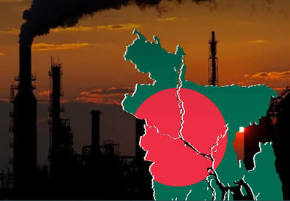
Bangladesh stands at an important crossroads in its climate policy.Recently, Prime Minister Tarique Rahmanhas instructed relevant ministries to formulate a comprehensive action plan to expand Bangladesh’s carbon credit portfolio, signaling a high-level policy intervention in climate diplomacy grounded in market-driven mechanisms. For decades, Bangladesh has rightly built its international reputation as one of the most vulnerable countries to climate change, drawing attention to the devastating impacts of floods, cyclones, sea-level rise, and salinity intrusion.
While this moral positioning earned Bangladesh a leadership role among climate-vulnerable nations, it has yielded insufficient financial support compared to the scale of adaptation needs, especially from the Global North. As Bangladesh prepares for graduation from the Least Developed Country (LDC) category and confronts growing climate financing gaps, carbon markets offer both opportunities and challenges. The central question is therefore no longer whether Bangladesh should engage with carbon markets, but whether it can do so in a manner that protects national interests, strengthens climate governance, and accelerates a genuinely low-carbon transition.
The Promise of Carbon Markets
Carbon credits—tradable certificates representing verified reductions in greenhouse gas emissions—are becoming central instruments of global climate action. Under Article 6 of the Paris Agreement, countries or companies that exceed their emission-reduction targets can purchase credits from developing nations, such as Bangladesh, to meet their commitments.
The financial stakes of carbon credits are immense. Analysts estimate that Bangladesh could generate $1 billion annually by strategically entering carbon markets. This assessment is further supported by broader regional analyses indicating that it could earn billions by leveraging its renewable energy, forestry, and industrial efficiency projects. Crucially, this represents non-debt-creating external finance. Unlike volatile foreign aid or high-interest climate loans that exacerbate national debt, carbon credit revenues flow directly from verified environmental performance, allowing us to fund domestic resilience on our own terms.
Strategic Sectors for Carbon Credits
The potential of the carbon credit market spans several key pillars of the Bangladeshi economy. The Ready-Made Garment (RMG) industry accounts for more than four-fifths of the country’s export earnings, which presents one of the most promising opportunities. As international brands commit to net-zero supply chains, manufacturers are under increasing pressure to reduce their carbon footprint. Investments in energy-efficient boilers, rooftop solar systems, waste-heat recovery, and cleaner production technologies can reduce emissions while generating high-integrity carbon credits. Participation in carbon markets could therefore enhance our export sector’s global competitiveness rather than simply generating additional revenue.
Nature-based solutions offer another significant opportunity. The Sundarbans—the world’s largest mangrove forest—together with coastal afforestation, wetlands, and restored ecosystems, stores vast amounts of carbon while protecting communities from cyclones, storm surges, and coastal erosion. If conservation and restoration projects satisfy internationally recognized standards for additionality, permanence, and independent verification, they could generate high-integrity carbon credits with both environmental and socio-economic benefits.
Furthermore, if Bangladesh’s 250 million tree pledge can succeed with transparent monitoring, it could enhance carbon sequestration while restoring degraded landscapes. Renewable energy initiatives, including solar home systems, utility-scale solar parks, and biogas projects, also offer opportunities to generate verified emission reductions that can attract climate investment.
Opportunity for Green Transition and Development
The true value of carbon markets lies in their ability to catalyze structural economic transformation. If governed effectively, carbon finance can mobilize private investment in renewable energy, industrial decarbonization, sustainable agriculture, and ecosystem restoration, reducing our dependence on fossil fuels while strengthening the long-term economic growth of Bangladesh.
Several Asian countries are already positioning themselves to benefit from emerging carbon markets. Singapore has developed an ambitious regulatory framework to position itself as a regional hub for carbon trading and climate finance. Indonesia has established domestic carbon trading mechanisms linked to its broader decarbonization strategy. These experiences demonstrate that competitive advantage depends not only on natural resources but also on regulatory certainty, institutional capacity, and investor confidence. We can learn from these experiences. Rather than treating carbon markets merely as a source of foreign exchange, policymakers should use them to accelerate the country’s green transition. High-integrity carbon projects can drive technological innovation, create green jobs, and improve industrial competitiveness while advancing national climate goals.
Greenwashing or Green Opportunity?
However, skeptics argue that carbon markets are inherently flawed, acting as a form of ‘greenwashing’ that allows wealthy, highly polluting nations to buy their way out of absolute domestic emission reductions while shifting the climate mitigation burden onto developing nations. Furthermore, critics point out that if Bangladesh sells its cheap carbon credits to foreign buyers, it cannot count those identical emission reductions toward its own Nationally Determined Contributions (NDCs) under the Paris Agreement. This could trap Bangladesh in a situation in which it falls short of its domestic climate obligations, potentially leading to future international trade penalties or carbon border adjustments.
While this warning is valid, it does not justify complete withdrawal from carbon markets. Instead, Bangladesh needs to engage in the carbon market with strategic caution. Bangladesh should enter carbon markets on its own terms, maintaining its sovereign control and proper regulation. Rather than allowing international brokers to exploit our domestic projects for cheap offsets, the government must establish a strong national carbon registry and a strict oversight framework. By setting a domestic floor price for carbon credits and selectively determining which credits are sold internationally and which are retained to support its national NDC targets, Bangladesh can fully protect its sovereign interests and make carbon credits a “green opportunity” to sustain its fight against climate change.
What Needs to Be Done?
Realizing the potential of carbon markets requires more than political ambition; it demands a coherent legal and institutional framework. Bangladesh should prioritize developing a comprehensive national carbon market strategy that aligns Article 6 cooperation with domestic climate objectives and long-term development planning.
A dedicated institutional mechanism should coordinate carbon market activities across relevant ministries, establish a transparent national carbon registry, and oversee the authorization of internationally transferred mitigation outcomes. Equally important is investment in domestic Measurement, Reporting and Verification (MRV) systems so that experts can independently measure, verify, and certify emission reductions in accordance with internationally recognized standards.
The Government should also enact a clear legal framework that defines ownership of carbon rights, establishes rules for benefit-sharing, and procedures for community consultation, particularly for forestry and other nature-based projects. Such legislation would provide greater certainty for investors while safeguarding the rights and livelihoods of local communities.
Finally, Bangladesh should invest in technical expertise, digital monitoring technologies, and institutional capacity to ensure that carbon projects consistently meet evolving international integrity standards. High-quality governance—not simply low-cost emission reductions—will determine the country’s long-term competitiveness in global carbon markets.
Carbon credits must never become a license to pollute or a substitute for ambitious climate action. Yet, if governed with integrity, transparency, and fairness, they can become a powerful instrument for financing Bangladesh’s green transition. The real opportunity lies not merely in selling carbon credits, but in building a carbon market that strengthens climate resilience, attracts sustainable investment, and positions Bangladesh as a credible leader in climate diplomacy.
1Md. Toufik Ahmed is a PhD Fellow at the Institute of Bangladesh Studies at the University of Rajshahi. His research interests include climate diplomacy, climate governance, and global environmental politics. He can be reached at toufikahmed.ru@yahoo.com
2Mst. Asma Mahmud is a senior civil judge and MPhil Fellow at the Institute of Bangladesh Studies at the University of Rajshahi. Her research interests include climate litigation, judicial activism, and climate justice. She can be reached at asmamahmud301@gmail.com
Posted in Anthropocene, Security and Peace

From a line drawn in 1914 to a standoff at Taksing in 2026, the eastern…