Diplomacy
Arunachal’s Restless Frontier: Why the India-China Border Is Heating Up Again
By Sameer Hussain |
From a line drawn in 1914 to a standoff at Taksing in 2026, the eastern…




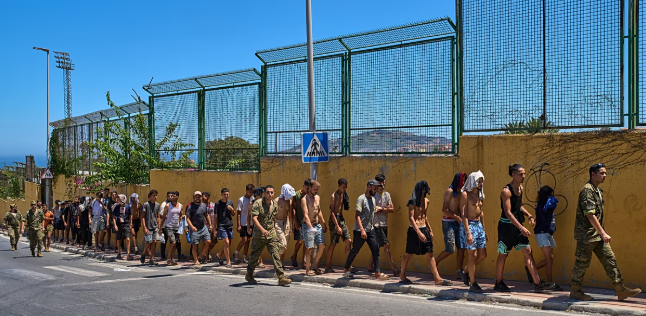
The tragedy of those who perished trying to make the crossing to Ceuta from Morocco, and who were heroes of the north in Spain’s North African territory, was one of the starkest reminders of how poorly the world has done in the area of migration in a way that is both humane and compassionate. The chaotic scene, with people drowning, tramping, crushing in distress, should be a nightmare for all policymakers across Europe and around the world. But it is important the tragedy doesn’t become just another day in the news cycle, another statistic unless we address the institutional failures that made this tragedy inevitable.
The Ceuta incident was not an accident, but a failure in a system. Thousands of migrants—including many from West Africa seeking a better life and a safe haven from poverty and violence tried to storm the border in a single coordinated surge. With dozens dying en route, Spanish authorities were caught off-guard and completely inundated, and were forced to act as gatekeepers. In the wake of the event, most migrants were simply repatriated to Morocco, a step that doesn’t resolve any of the causes and does little to prevent future calamities.
Humanitarian groups
It is not that this tragedy is unique, but that it is predictable. Humanitarian groups for years have said the situation at the border crossings, such as Ceuta, was unsustainable. Poorly staffed and inadequately resourced processing centres, inadequate social services, and the desperation of those without any other choice makes for a ticking bomb waiting to go off. If thousands of migrants come together and they know that they have nothing to lose by crossing, then the tragedy is not a question, it’s a fact.
European Union’s policy
The European Union’s policy towards migration has been shaped too long by a mindset based on security rather than humanitarianism and the view of migrants as a problem to be solved. Fortress walls, detention facilities and rapid deportations are not solutions to migration causes for certain groups of political opinion. No one takes a tramp out of their home lightly. They run away due to war, famine, persecution, or total economic failure. These facts remain the same even with the construction of higher walls the only thing that changes is the urgency to break these walls down.
Moral responsibility
A hard question to ask is what is our moral responsibility to those seeking refuge? The wealthier Spain, an EU Member State, has the capacity to process migrants in a humane manner, to conduct a reliable evaluation of asylum claims and to accommodate migrants for the duration of their asylum processing. Instead, it found itself in the position of turning away the desperate with tragic consequences. It’s not a fault of Spain, it’s a fault of Europe.
But at the same time we need to recognise the real problems of migration. Communities that experience high rates of migration are experiencing a significant strain in the areas of housing, employment and services. These issues are not a product of xenophobia, but are worthy of the serious consideration. The error is not in recognising these difficulties but in letting them permeate fundamental human rights.
How do we fix this?
The deaths in Ceuta are symptomatic of the absence of border management and more than that they are a failure of political imagination. We’ve been so used to viewing migration as a security concern that we have lost sight of it being a human rights concern as well. Each person who drowned trying to cross a border, each family separated by deportation, each child held in a detention center is a failure of conscience.
This isn’t a call for open borders or for disregarding any valid security issues. Instead, a call for policies that strike the balance between humanity and practicality, policies which treat migrants as people and not abstracts, policies which seek to address the root causes instead of managing symptoms.
The migrants who rushed to Ceuta were the people who were looking for a better life and so were our ancestors who went when they migrated. More realistic and humane ways to handle immigration are possible but they will require a rejection of the failed fortress mentality that has lead to the tragedy of Ceuta. Until we do, we’ll see more deaths, more statistics, more reminders of our own moral culpability that we haven’t made something of our live values.
The question Before Europe is simple: to move forward the current trajectory of deterrence-to-despair, or to invest in the development of a migration system that is aware of our limits and our responsibility. The tragedy at Ceuta puts us in a position where we can no longer make wrong choices.
Reference
Source: CBS News
Date: August 1-3, 2026
URL: https://www.cbsnews.com/
Mirza Ahsan Bilal,Umm-e-Rubab
Lecturer at University of Lahore in School of integrated Social sciences
Umm –e-Rubab Student of Manchester adult learning center greenheyes. UK.
Posted in Opini, Politics and Society

From a line drawn in 1914 to a standoff at Taksing in 2026, the eastern…