Diplomacy
Arunachal’s Restless Frontier: Why the India-China Border Is Heating Up Again
By Sameer Hussain |
From a line drawn in 1914 to a standoff at Taksing in 2026, the eastern…




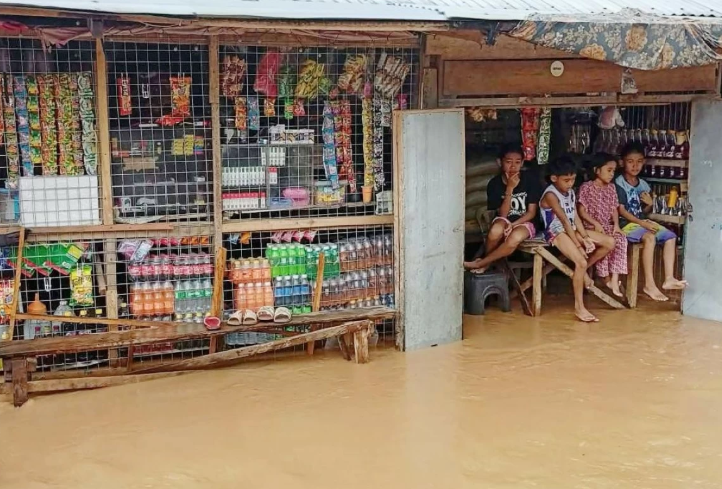
Recurrent floods and landslides in Mindanao are not just ‘natural disasters’, they are the product of environmental degradation, governance failures and caloric imperialism
The recurring humanitarian crisis in Mindanao demonstrates how environmental degradation and governance failures have transformed seasonal weather events into devastating disasters. For many generations, the monsoon rains sustained agriculture and replenished water sources across the region. However, decades of extensive logging, mining, quarrying and land conversion activities have significantly weakened the ecological integrity of Mindanao’s watersheds and mountain ranges. The destructive impact of a series of earthquakes further destabilized already fragile landscapes, making them highly susceptible to landslides and flash floods. As a result, both the urban and rural communities that once relied on predictable seasonal rainfall now face recurring threats to their homes, livelihoods and even food security.
This situation reflects the central argument of Caloric Imperialism Theory, which explains how the peripheral regions supply food, labor and natural resources to a dominant center while remaining economically and environmentally marginalized. Mindanao has long served as one of the Philippines’ primary agricultural regions, producing a substantial share of the country’s food supply. Despite this contribution, many grassroots communities continue to experience widespread poverty, inadequate infrastructure and limited disaster preparedness. The benefits generated from the region’s natural wealth have largely accrued elsewhere, while the environmental costs remain concentrated among local populations. Consequently, communities that sustain the nation’s food security are themselves among the most vulnerable to climate-related disasters.
To understand how these dynamics unfold in practice, it is useful to trace the concrete mechanisms through which caloric imperialism operates in Mindanao. One concrete mechanism through which caloric imperialism operates in Mindanao is the extraction of agro-commodities and minerals under arrangements that prioritize national export targets and urban consumption over local ecological limits. Large-scale plantations of banana, pineapple and palm oil, alongside mining concessions for nickel and gold, have reconfigured land use patterns in ways that fragment forests, drain wetlands and reduce the capacity of watersheds to absorb heavy rainfall. This pattern is not accidental: it reflects a political economy in which peripheral regions are expected to deliver calories and raw materials to the center, while environmental externalities sedimentation, silted rivers, loss of soil fertility are absorbed by the same communities that produce these goods. Over time, the cumulative effect is a landscape that is both highly productive in economic terms and highly fragile in ecological terms, setting the stage for disasters when extreme weather events occur.
Empirical indicators underscore this vulnerability. Deforestation rates in parts of Mindanao have reduced forest cover to well below the threshold recommended for stable hydrological cycles, increasing surface runoff and the likelihood of flash floods. Mining tailings and quarry waste have clogged river channels, lowering their carrying capacity and amplifying flood heights during monsoon peaks. Meanwhile, rapid urban expansion in low-lying areas often without adequate drainage or zoning enforcement has placed growing populations directly in harm’s way. These dynamics help explain why rainfall events that would once have been manageable now trigger catastrophic landslides and inundations, particularly in provinces where upland degradation and downstream settlement pressures intersect.
From a governance perspective, caloric imperialism is reproduced not only through economic arrangements but also through institutional practices that marginalize local knowledge and priorities. Disaster risk reduction plans are frequently designed in Manila or regional capitals with limited participation from affected barangays, resulting in interventions that are technically sound on paper but misaligned with local realities. Community-based early warning systems, indigenous forest management practices and traditional water conservation techniques are often overlooked in favor of standardized, capital-intensive projects. This top-down approach not only undermines the effectiveness of resilience measures but also reinforces the perception that local communities are passive recipients of aid rather than active agents in shaping their own climate futures.
A more transformative response would therefore link ecological restoration directly to questions of economic justice and political representation. This could include redirecting a portion of revenues from agro-export and mining sectors into watershed rehabilitation funds managed through multi-stakeholder councils that include farmers’ cooperatives, indigenous groups and local governments. It could also involve conditioning future investment approvals on compliance with stricter environmental safeguards and community consent processes, ensuring that new projects do not replicate the patterns of degradation that have heightened disaster risks. By reframing the Mindanao crisis as a problem of caloric imperialism rather than merely a natural disaster, policymakers can move beyond reactive relief toward structural reforms that address both the production of vulnerability and the distribution of its costs. These structural dynamics help explain why, even when disaster mitigation projects are formally in place, their impact remains limited in the face of recurring environmental shocks.
The crisis is further aggravated by the persistent governance failures, particularly in the problematic implementation of projects such as flood control and disaster mitigation programs. Allegations of corruption, project delays and poorly executed infrastructure have undermined the effectiveness of public investments intended to reduce disaster risks. Instead of prioritizing the comprehensive watershed management and resilient infrastructure, some interventions have focused on short-term engineering measures that provide limited long-term protection. Weak accountability and ineffective public spending leave vulnerable communities repeatedly exposed to disasters, reinforcing structural inequalities and limiting their capacity to recover from successive crises.
Equally concerning is the tendency of political leaders to emphasize emergency relief operations while neglecting the deeper causes of environmental vulnerability. The distribution of food packs and financial assistance provides immediate humanitarian support and remains essential during emergencies. However, when relief becomes the primary response without corresponding investments in environmental restoration, disaster risk reduction and sustainable development, communities remain trapped in a cycle of dependency and repeated displacement. Effective governance requires balancing immediate relief with long-term strategies that address the underlying drivers of vulnerability, including environmental degradation, weak infrastructure and institutional shortcomings.
Addressing the crisis in Mindanao requires a comprehensive policy approach that prioritizes ecological restoration, transparent governance and community-centered climate resilience. Protecting watersheds through reforestation, strengthening regulations on environmentally destructive industries and ensuring accountability in public infrastructure projects are essential steps toward reducing disaster risks. At the same time, greater investment in resilient infrastructure, early warning systems and locally driven adaptation programs can enhance the capacity of communities to withstand future climate hazards. Viewed through the lens of Caloric Imperialism Theory, the Mindanao crisis is not solely the result of natural forces but also of longstanding political and economic structures that have concentrated benefits while leaving local communities disproportionately exposed to environmental harm.
Posted in Anthropocene, Southeast Asia

From a line drawn in 1914 to a standoff at Taksing in 2026, the eastern…