Diplomacy
Arunachal’s Restless Frontier: Why the India-China Border Is Heating Up Again
By Sameer Hussain |
From a line drawn in 1914 to a standoff at Taksing in 2026, the eastern…




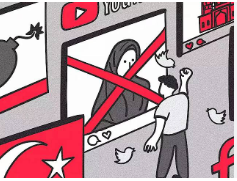
Violence often grows in silence and isolation. Breaking that isolation can interrupt the cycle before it reaches the point of irreversible harm
Many violent attackers do not emerge suddenly; rather, their actions are often the result of long-term emotional suffering combined with recent triggering events. This process usually begins with persistent trauma, where individuals carry years of accumulated pain, humiliation, rejection, or unresolved anger. These emotional wounds may stem from family conflict, bullying, social isolation, financial struggles, or repeated personal failures. Over time, this pain creates deep frustration and resentment.
The second stage involves acute stressors, which are immediate life events that intensify existing emotional instability. These may include losing a job, the end of a romantic relationship, public embarrassment, academic failure, legal problems, or sudden financial collapse. Such events can act as the final push for someone already emotionally vulnerable.
At this point, many individuals begin to develop externalized blame. Instead of viewing their suffering as a general hardship of life, they shift toward blaming specific people, groups, institutions, or political systems. Their thinking changes from “life is unfair” to “these people are responsible for destroying my life.” This transition is especially dangerous because it creates a target for revenge and opens the door for ideological justification of violence.
Beyond the Simplistic Explanation of Mental Illness:
Public discussions after violent attacks often focus immediately on the idea of “mental illness.” However, experts argue that this explanation is often too simplistic and misleading. According to forensic psychologist J. Reid Meloy, only a minority of attackers have a clear clinical psychiatric diagnosis at the time they commit violence. Most are not suffering from severe psychosis or a formally diagnosed mental disorder.
Instead, the primary driving force is often a combination of personal grievance and ideological reinforcement. Many attackers are individuals experiencing a crisis of identity, emotional instability, social alienation, and a loss of purpose. They may feel deeply wronged and seek meaning through violence. The issue is often less about psychiatric illness and more about the absence of emotional stability, social support, and psychological resilience—what can be described as a lack of “mental wellness.”
Extremist ideologies, conspiracy theories, or violent online communities can provide these individuals with a framework that justifies revenge. Violence then becomes, in their mind, not only acceptable but necessary.
The Latest Escalation: The Attack on Donald Trump:
The psychology of the “performative attacker” was visible once again in the recent attempted attack on Donald Trump during a public gala event. This incident occurred during a period of intense political polarization, following controversial public statements, heated legislative debates, and widespread arguments about Trump’s political future and fitness for office.
Authorities charged a suspect with attempted murder, and analysts noted familiar patterns seen in many modern attackers. Like the shooters involved in attacks in Turkey and elsewhere, the individual appeared to view violence not simply as an act of harm, but as a symbolic statement—a message to society.
Professor James Densley, a leading expert on mass violence, explains that when attackers target highly visible public figures or random strangers, the violence becomes performative. It is designed to be witnessed, recorded, and remembered. The attacker seeks recognition, significance, and a sense of power through public destruction. In many cases, they believe they are correcting an injustice or forcing society to acknowledge their pain.
This type of violence is not always primarily ideological; often it is deeply personal, with ideology serving as a tool for justification.
Understanding the Warning Signs:
Preventing such tragedies requires recognizing what experts call “leakage”—the tendency of attackers to reveal their intentions before carrying out violence. Very few attackers act without leaving clues. These warning signs often appear in behavior, speech, online activity, or personal interactions.
Key Warning Behaviors:
| Warning Behavior | Description |
| Leakage | Communicating violent intent through jokes, social media posts, threatening comments, manifestos, or direct statements. |
| Fixation | An obsessive focus on previous attackers, weapons, revenge fantasies, or a specific target. |
| Identification | Seeing oneself as a warrior, soldier, avenger, or martyr who must carry out a mission. |
| Preparation | Researching targets, studying security patterns, purchasing weapons, and planning logistics the “homework phase.” |
Leakage is especially important because it offers the best opportunity for intervention. Friends, classmates, coworkers, or family members often notice these signs first. Taking such signals seriously can save lives.
The Role of Demographics and Violence Statistics:
To fully understand the issue, it is necessary to examine the broader statistical landscape of mass violence, particularly in Western societies such as the United States.
Gender
Research consistently shows that approximately 98% of mass shooters are male. This reflects broader patterns of violent behavior, social expectations of masculinity, emotional suppression, and the cultural association between male identity and dominance or revenge.
Race and Ethnicity:
According to data from the Violence Project, the racial breakdown of mass shooters in the United States since 1966 is approximately:
These figures should be interpreted carefully, as they reflect broader social inequalities, access to firearms, and different forms of social marginalization rather than simple racial causation.
Domestic vs. Public Violence:
Although public mass shootings receive the most media attention, the majority of violent incidents actually occur between people who know one another family members, intimate partners, coworkers, or neighbors. Domestic violence remains statistically more common than stranger attacks. However, public attacks are becoming more frequent and more visible. One major reason is the copycat effect, where individuals already in crisis identify with previous attackers and imitate their actions. Media coverage, online manifestos, and viral attention can unintentionally create models for future violence.
Prevention Through Early Intervention:
Experts widely agree that while it is impossible to predict every violent act, prevention becomes possible during the grievance stage before anger transforms into action. Intervention must focus on emotional support, crisis management, and early response to warning behaviors. When family members, peers, teachers, or colleagues recognize leakage and take it seriously, they can help redirect individuals away from violence.
Providing mental health support, reducing social isolation, addressing personal grievances, and creating pathways for de-escalation are critical steps. Violence often grows in silence and isolation. Breaking that isolation can interrupt the cycle before it reaches the point of irreversible harm. Ultimately, preventing violence is not only about stopping attackers it is about recognizing suffering early enough to ensure that the first shot is never fired.
In the era of Anthropocene, where digital networks have become the new landscape of human interaction, this process of radicalization from personal trauma to public violence shows how socio-psychological pressures respond to and are shaped by our self-made environment.
Posted in Crime

From a line drawn in 1914 to a standoff at Taksing in 2026, the eastern…