Diplomacy
Arunachal’s Restless Frontier: Why the India-China Border Is Heating Up Again
By Sameer Hussain |
From a line drawn in 1914 to a standoff at Taksing in 2026, the eastern…




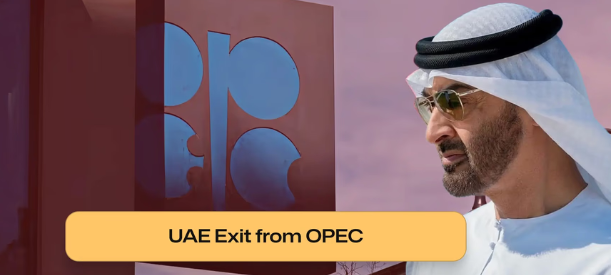
UAE’s exit from OPEC has triggered shockwaves far beyond the energy market. For decades, the oil-producing states of the Gulf portrayed a sense of strategic unity, forming economic and geopolitical interests together, such as the Gulf Cooperation Council (GCC) and OPEC. Abu Dhabi’s withdrawal, marks a beginning of a new political era in the Gulf, a time in which it’s less about solidarity and more about national ambitions.
Initially, many analysts thought the UAE’s exit was due to a dispute over oil production quotas, but the reality appears far more complex. The move arrives as tensions have increased between Abu Dhabi and Riyadh on political matters, as well as differences in their security agendas and a shifting landscape of Gulf alliances in the unstable Middle East.
UAE has long been one of the influential members of OPEC. It had vast reserves with increasing production capacity and played a key role in maintaining the cartel ability to affect oil prices internationally. However, tensions had been growing for many years. Abu Dhabi increasingly viewed about OPEC’s cuts as a limitation on its economic plans, particularly in billions of dollars of investments in building up ADNOC, its national oil company. UAE’s aim to rise production capacity in the next few years, which is difficult to achieve under OPEC quotas.
Still, the move to economics only ignores the more profound geopolitical reorientations that are underway. The real takeaway from the UAE’s departure is the reveals about the declining cohesion of Gulf unity.
The UAE and Saudi Arabia were regarded for decades as the two pillars of the politics of the Gulf. They were jointly responsible for developing regional policies on Yemen, energy, trade and relations with the big powers. But there were growing differences that were not seen to the naked eye. Both nations began to compete for regional influence, foreign investment, logistics control and diplomatic influence. There was conflict on Yemen as Abu Dhabi and Riyadh supported different groups, and on more general policies toward Iran, Israel and regional security.
These divisions caused regional instability, which has been long-standing and because of tension with Iran. Increasingly, Emirati officials voiced their irritation over a perceived lack of regional cooperation and a lack of effective collective security response by their Gulf partners, according to multiple reports. The UAE, especially following the Abraham Accords, has established a more autonomous foreign policy that Favors strategic flexibility to the traditional Gulf consensus.
This shift reflects a wider change in Gulf politics. Traditionally, the main reason for Gulf solidarity has been the presence of common interest and common threats. However, today Gulf states have ambitions for other visions of the nation. Vision 2030 is in the Saudi mind and so is their political hub in the region. In the meantime, the UAE is looking to become a world-class finance, technology, logistics and diplomacy centre. These aspirations overlap and compete.
So, UAE’s exit from OPEC is a gesture of more than just a disagreement over the volume of oil to be produced. It is a rejection to the old regionalism which required compromise in the name of unity. Increasingly, Abu Dhabi feels that strategic autonomy is the new way forward rather than regional consensus.
The implications have the potential to be massive. But OPEC may be emerged weaker if its largest and most solvent producer is taken out. As time goes on, some analysts said that the group may lose its ability to regulate oil supply and to stabilize markets. Member nations may consider their best interests over the collective if UAE begins to produce on its own and produce more.
The political message is more important, and that is one that resonates throughout the Gulf. One of the foundations of the creation of the GCC was the principle that the monarchies of the Gulf have common strategic interests in times of crisis. But in recent years, cracks have begun to show in this edifice: from the Qatar blockade, and there are opposing views on Iran and Israel. Gulf unity is no longer taken for granted with the UAE’s exit from OPEC.
But that doesn’t necessarily mean that the Gulf alliance system will collapse. The Gulf states continue to be both economically tied and closely allied with West and dependent on each other in terms of security. If interests coincide, cooperation will continue. However, the hitherto unity of the Gulf might be a thing of the past.
What’s taking shape instead is a more competitive Gulf order, in which states work together in a limited fashion, and more forcefully pursue their own national agenda. Thus, the UAE exit from OPEC is more about politics than oil barrels and oil production quotas. It’s an indication that the Gulf states are rethinking their self-perception, alliances and regional power dynamics.
Posted in Uncategorized

From a line drawn in 1914 to a standoff at Taksing in 2026, the eastern…