Diplomacy
Arunachal’s Restless Frontier: Why the India-China Border Is Heating Up Again
By Sameer Hussain |
From a line drawn in 1914 to a standoff at Taksing in 2026, the eastern…




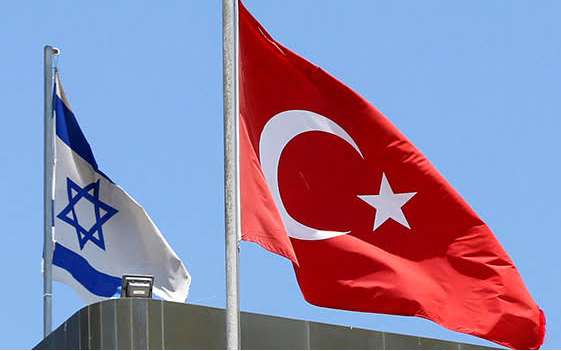
The Middle East stands at a critical crossroads in 2026. What was once a pragmatic, if understated, partnership between Turkey and Israel has deteriorated into an open strategic rivalry that carries profound implications not just for the two countries, but for the entire region’s stability and future trajectory. Understanding this shift is essential to comprehending the fragmented geopolitical landscape that will define the coming years.
A Broken Alliance
Turkey’s recognition of Israel in 1949 made Ankara the first Muslim-majority nation to extend such diplomatic recognition. For decades, the two countries maintained a quiet yet consequential partnership anchored in shared interests: intelligence cooperation, military technology exchange, tourism, and trade that, at its peak, reached approximately $10 billion annually. This alliance reflected a pragmatic understanding that two non-Arab states in a region dominated by Arab nationalism could benefit from discrete cooperation.
That era has definitively ended. The deterioration that began in 2008 has evolved into something far more consequential a systemic rivalry rooted in competing visions of regional order. In November 2025, Istanbul’s Chief Public Prosecutor issued an arrest warrant for Israeli Prime Minister Benjamin Netanyahu and 37 other Israeli officials on charges of “genocide” in the Gaza Strip, marking a sharp escalation in Turkey’s anti-Israel rhetoric following the Gaza war, despite Ankara’s efforts to position itself as a postwar mediator and reconstruction partner. Simultaneously, Israel increasingly sees Turkey, alongside Iran, as a top-tier strategic threat and therefore needs to devote greater energy to cooperation with Greece and Cyprus, which share Israel’s concerns.
The Architecture of Confrontation
This rivalry manifests across multiple dimensions. Economically, Turkey intensified its May 2024 trade embargo on Israel by halting the issuance of Eur-Med “preference documents,” which previously allowed Turkish goods routed through Europe to qualify for customs exemptions under a multilateral pan-European-Mediterranean trade framework, effectively blocking a key mechanism that enabled indirect trade via diagonal cumulation with the European Union. What began as political posturing has evolved into genuine economic isolation.
Militarily and strategically, the competition has sharpened considerably. The United States has expressed interest in potentially selling fighter jets to Ankara, which has become a regional adversary of Israel, though the State Department has indicated Turkey is not currently eligible to buy advanced aircraft systems.Meanwhile, a new defense partnership between Israel, Greece, and Cyprus has expanded recently in ways that challenge Turkey’s position in the Eastern Mediterranean, heightening Ankara’s sense of encirclement on the seas, with three powers formalizing plans to deepen defense ties and conduct joint air and naval exercises.
The competition extends to Syria, where both powers have invested heavily in the post-Assad environment. In post-Assad Syria, Turkey is working to consolidate its influence through its relationship with the new authorities, while Israel views this trend with concern, especially following US support for integrating Kurdish forces into the Syrian army, and amid fears of losing the Air Force’s ability to operate with total freedom of movement in Syrian airspace.
A Regional Power Vacuum
The Turkey-Israel rivalry cannot be divorced from the broader Middle East context. The Middle East enters 2026 in a state of exhausted realignment, with the fall of Assad’s regime in December 2024 and the subsequent rise to power of Ahmed al-Sharaa in Damascus marking a clear transition from interstate conventional warfare to high-stakes proxy competition and systemic resource-driven civil unrest.
This realignment has created unprecedented uncertainty about regional order. The traditional power structures that characterized Middle Eastern politics for decades have fractured. Iran’s position has weakened following its military exchanges with Israel. Saudi Arabia remains a pivotal actor but is focused inward on its Vision 2030 economic transformation. The United States, under the Trump administration, pursues a transactional approach that oscillates between engagement and isolation depending on perceived strategic interests.
Economic Headwinds and Underlying Instability
The region’s economic trajectory adds another layer of concern. The OECD’s latest report details how a Middle East conflict is testing global economic resilience, revising 2026-2027 growth projections downward and warning of persistent inflationary pressures from an energy supply shock.The Middle East region could transition in 2026 to peace and stability or, perhaps more likely, backslide into regional conflagration, with conflicts in Gaza, Lebanon, Libya, Sudan, and Yemen, as well as political divisions in Yemen, Iraq, and Syria, unlikely to fully resolve in 2026.
These unresolved conflicts create flashpoints where Turkey and Israel might find themselves in direct confrontation. While direct military conflict between the two NATO-adjacent powers remains improbable both understand the costs would be prohibitive the risk of escalation through proxies, accidents, or deliberate provocations has risen substantially.
The Path Forward
The trajectory of Turkey-Israel relations will significantly influence Middle East stability through the remainder of 2026 and beyond. Several scenarios merit consideration. In an optimistic scenario, cooler heads prevail, both countries recognize the costs of confrontation, and a modus vivendi emerges, perhaps facilitated by American pressure. In a more pessimistic scenario, rhetoric becomes action, uncontrolled incidents trigger escalation, and the region spirals into broader conflict.
The most likely scenario lies between these poles: sustained cold competition, economic pressure, proxy maneuvering, and episodic crises that test both countries’ commitment to restraint. This “cold war” dynamic will constrain diplomatic solutions to other regional conflicts and complicate American efforts to build the stable architecture it seeks in the region.
The Middle East’s future depends not only on how Israel and Iran manage their relationship, or how the Palestinian question is addressed, but also on whether two increasingly hostile powers Turkey and Israel can avoid turning their strategic competition into kinetic conflict. The stakes for regional stability could hardly be higher.
References
1. Siboni, Gabi and Winner, Erez. “Turkey–Israel Relations: Strategic Context and Policy Considerations.” Jerusalem Institute for Strategic Studies, January 2026.
2. World Bank. “Global Economic Prospects: 2026 Outlook.” World Bank Publications, July 2026.
Posted in Diplomacy, Security and Peace

From a line drawn in 1914 to a standoff at Taksing in 2026, the eastern…