Diplomacy
Arunachal’s Restless Frontier: Why the India-China Border Is Heating Up Again
By Sameer Hussain |
From a line drawn in 1914 to a standoff at Taksing in 2026, the eastern…




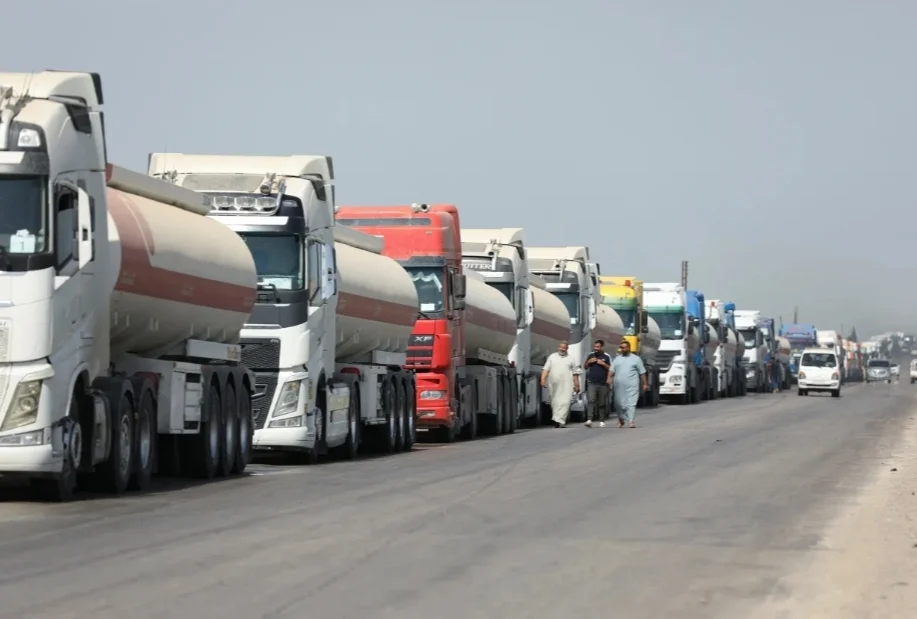
On Monday, 26 October 2026, in Damascus, Syria’s General Establishment for Road Transport signed a $147 million contract with Qatar’s Almohannadi for Roads, Trading and Contracting (MRTC). The job is to upgrade the highway linking Damascus to the Iraqi border. By Gulf standards the sum is small, a footnote beside the giant projects that dominate regional headlines. I think it deserves far more attention than its price suggests, because it shows how Syria’s reconstruction is actually being done: one contract, one road and one partner at a time.
The contract is meant to rebuild transport infrastructure and strengthen regional trade links. According to industry reporting, the highway is one of Syria’s primary overland arteries to Iraq, and it has suffered serious deterioration and capacity bottlenecks after years of conflict. Work is scheduled to be completed within 900 days.
The Syrian side made clear this is not a one-off. The government said it plans to sign six additional road construction contracts and three supervision contracts with international companies. The finance minister said $193 million has been allocated for major road projects in the 2026 budget, with a further $450 million earmarked in the draft 2027 budget. In other words, the Damascus–Iraq highway is the opening move in a much larger programme.
Roads are the least glamorous part of reconstruction, and that is precisely why they matter. A functioning highway lowers the cost of moving goods, reconnects towns to markets, and makes every other investment, from factories to housing, easier to justify. Nobody builds a factory beside a road that trucks cannot use.
The Iraqi direction is especially significant. For a country that has lost much of its economic connectivity, the corridor to Iraq is a way back into regional trade. It also matters in a region where sea lanes have become politically contested. Gulf foreign ministers meeting in Manama in June explicitly rejected any tolls, fees or attempts to assert control over the Strait. When maritime routes are under pressure, overland corridors gain strategic value. My view is that a repaired Syrian road will increasingly be seen, in Baghdad, Doha and elsewhere, as part of the region’s trade resilience, and not just as a Syrian domestic project.
This is not MRTC’s first Syrian award. In September, the same company was awarded a $150 million project to rehabilitate the road between al-Busayrah in Deir Ezzor and al-Tanf in the Homs countryside, including a new 170-kilometre road and a 45-kilometre connecting road. Put together, that is roughly $297 million of road work in about two months. The company itself was only established in Qatar in 2015, which makes its rapid rise in Syria all the more notable.
I read this as a distinctive form of Qatari diplomacy. Gulf statements about Syria’s sovereignty, unity and territorial integrity are important, and Gulf ministers have repeated them. But statements do not repair a highway. Qatari firms on the ground do, and every kilometre of asphalt builds goodwill and a lasting commercial footprint. It is soft power that people can drive on.
That is a smart approach, and other Gulf states should take note. Capital that arrives as concrete contracts is easier for citizens to see, and for governments to defend, than pledges that never leave the conference hall.
Enthusiasm should not replace scrutiny. Four questions will determine whether this deal becomes a model or a cautionary tale.
Two major contracts have gone to the same firm in a short period. That does not suggest wrongdoing, and the firm may well have been the best bidder both times. But Syria’s institutions are rebuilding public trust, and transparency matters. Publishing how bids were invited, evaluated and awarded would protect the government as much as the public.
Nine hundred days is a demanding timeline for a major highway in a country still recovering from conflict. Security, material supply and financing will all test it. Slippage is the usual enemy of reconstruction projects, and visible delays can quickly turn early optimism into disappointment.
A road is also a jobs programme if it is designed to be one. The government should require meaningful use of Syrian labour, suppliers and engineers, so that the project builds skills and incomes, not just a pavement. Supervision contracts should likewise develop local oversight capacity.
Building a road is the easy part. Maintaining it for decades is harder. Without a funded maintenance plan, today’s modern highway becomes tomorrow’s pothole problem.
First, Damascus should publish a simple, public tracker of its road programme: contract values, contractors, timelines and progress. If the $450 million earmarked for 2027 is spent, citizens should be able to see where it went.
Second, Syria should avoid dependence on any single partner. Qatar’s role is welcome, but the government itself has said it plans to sign further contracts with international companies. Competition among firms is the best protection for quality and price.
Third, Gulf partners should coordinate. If Qatar builds roads, others can support customs, logistics, energy and border facilities. A highway that ends at a slow border crossing delivers only half its value.
The $147 million deal will not transform Syria’s economy by itself. It will, however, help answer a basic question: can Syria reconnect to its neighbours and attract serious partners for rebuilding? The early evidence suggests yes. Qatar has understood that influence in post-conflict states is built not only in conference halls but on the ground.
The real test comes after the signing ceremony. Roads that are finished on time, maintained properly, and awarded transparently will do more for Syria’s recovery, and for Qatar’s standing, than any press release. If that happens, this contract will be remembered as the moment asphalt became diplomacy.
Posted in Diplomacy, Security and Peace

From a line drawn in 1914 to a standoff at Taksing in 2026, the eastern…