Diplomacy
Arunachal’s Restless Frontier: Why the India-China Border Is Heating Up Again
By Sameer Hussain |
From a line drawn in 1914 to a standoff at Taksing in 2026, the eastern…




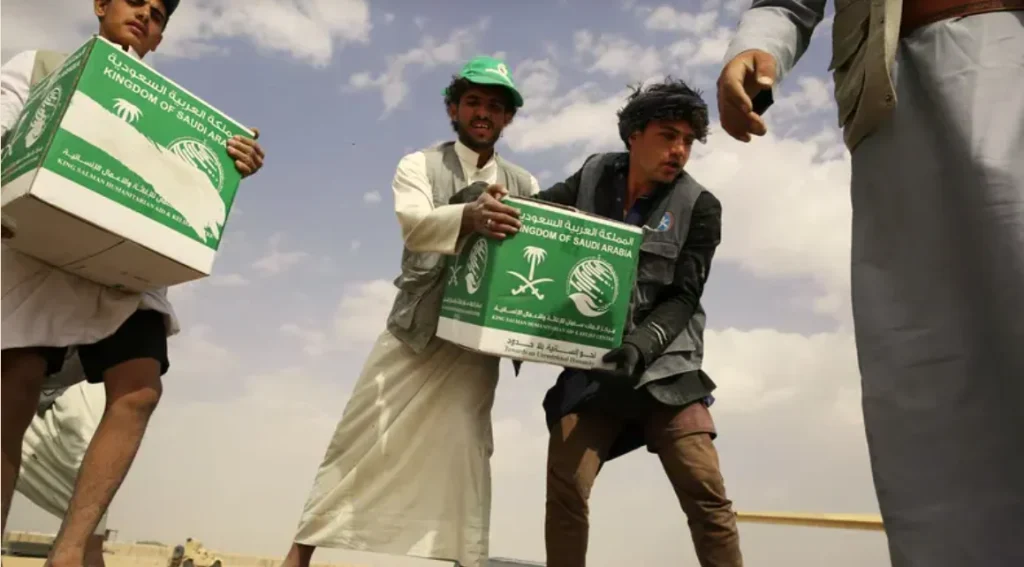
Saudi Arabia has approved a new budget support package for Yemen’s government valued at over SR224 million (more than $59.7 million), Arab News reported, citing the Saudi ambassador to Yemen, Mohamed Al-Jaber, and through the Saudi Development and Reconstruction Program for Yemen (SDRPY). The announcement, together with Riyadh’s broader pledges, highlights a multi-faceted approach that can be broken down into three levels:
Budget support provides quick economic and fiscal stability.
Fuel support maintains electricity and other critical services.
Water, energy, agriculture and infrastructure are the areas in which development projects invest.
The tiers address different needs. They also vary significantly in terms of their longevity, when viewed through the Anthropocene.
Tier one: budget support and logic of stability.
The top one is the one in the headline. The money is to be used to finance the government’s budget shortfall and to help ensure the timely payment of public wages and salaries, and the ambassador reports that it would “help to maintain the regularity of the government’s finances and the purchasing power of Yemeni citizens. A paid wage supports a family and an active civil service in an economic system that has been ravished with over a decade of conflict.
It’s a big scale. Saudi Arabia has allocated over $12.6 billion to support development and economic interventions in Yemen between 2012 and 2026, and the latest aid comes at the latest phase of Riyadh’s military engagement with the Houthis, which is the most severe escalation since the 2022 truce, reports Gulf Business. However, budget support is a thing which is used up as it is spent. The month is being stabilized with it and the following month it has to be repeated.
Tier two: fuel support and the cost of keeping the lights on – for those that can afford it.
The second level is energy. The salary support came after the oil derivatives were agreed upon for power stations in several governorates in Yemen at a price of $150 million, notes Arab News. This fuel (diesel and mazut), Okaz said, is intended for ensuring the functioning of power stations and to maintain the important sectors of the economy, which are dependent on them.
The humanitarian logic is strong: Health facilities, pumps and refrigeration don’t need a long-term energy transition. But fuel suffers from the same defect as tier one. It’s a design to make it recurrent. One shipment necessitates another and the nation’s power supply remains dependent on imports of fossil fuels, all subject to price fluctuations, supply uncertainty and in the event of a war, an attack.
Tier three: development projects, where resilience lives
There is a third tier where aid can influence the underlying conditions as water, energy, agriculture and infrastructure are the sectors that will determine the ability of Yemenis to withstand the environmental challenges of this century.
Those pressures are intense. The FairPlanet analysis estimates that the amount of water available per person has dropped to approximately 83 cubic metres per year, well below the threshold for scarcity internationally, which is 500. Agriculture uses more than 90 per cent of the country’s water. As reported in the UN’s 2026 Humanitarian Needs and Response Plan, 14.4 million people will require WASH support and humanitarian action by itself will not address the drivers of Yemen’s crisis. But there’s an added layer of complexity to these: The Stockholm Environment Institute has studied the issue of vulnerability and found that patterns of water consumption, rather than climate change, are a major contributor, and that improved management can make a difference.
A water project that is making profits, a solar system that operates a pump, an irrigation improvement, a road that does not get flooded: they go on and on after the money has been received. This tier is different from the others because that is what it’s used for. Tier 1 and tier 2 are a purchase of stability for the duration. Tier 3 has the ability to increase shock absorption capacity.
The imbalance
The public record documents the focus of attention. The first two items, tranches of cash and shipments of fuel, dominate headlines. They are quick to announce, easy to see and simple in politics and are in times of war often unavoidable. If the emergency tiers continue to escalate, and the development tiers remain relatively muted, however, then aid becomes more of a ‘treadmill’—an indispensable, adequate, and sustainable, but never self-reliant endeavor.
An example of a climate-smart sequence
It is not necessary for the three tiers to compete. They may be arranged in sequence to help each other:
Connect Fuel with Solar. Fuel support to supplement solar plus storage for hospitals, water pumps and local grids; reducing each year’s fuel bill.
Make development portfolio climate-proof. Focus on water efficiency and drought resistant agriculture and infrastructure, and evaluate climate risk for all projects.
Incorporate indicators for resilience into funding for budget. Link future tranches to clear reporting of service delivery (water and power) and not just amounts disbursed.
•Publish results. If each tier could be reported as having achieved, then it would be easier to gain Yemenis and international partners trust.
Caveats
This analysis is based on public statements and press reports, and shows the donor’s and the recipient government’s viewpoints. Adaptation in a divided country with conflict is challenging, and it must be developed with the people and institutions of Yemen themselves and not imposed upon them. The three-tier framing is also oversimplified, in that the categories are not mutually exclusive and emergency goals cannot be delayed for long-term objectives.
Conclusion
In wartime, to pay salaries and keep the lights on is no small feat. However, the third tier is the one who will reap rewards in the Anthropocene. Saudi support for Yemen in the upcoming years should not only be in the measure of the amount of money it doles out each quarter, but the amount Yemen does not need to be saved by the quarter..
Posted in Opini, Security and Peace

From a line drawn in 1914 to a standoff at Taksing in 2026, the eastern…