Diplomacy
Arunachal’s Restless Frontier: Why the India-China Border Is Heating Up Again
By Sameer Hussain |
From a line drawn in 1914 to a standoff at Taksing in 2026, the eastern…




Abstract
Today, in an international context, national security is not just about military power and territorial defense, but also about diplomacy, economic stability and protection, political stability and regional cooperation. The States in conflict-prone areas should work on strategies that can handle traditional and non-traditional security threats. Regional instability not only has direct effects on domestic security and development for Pakistan, but also has direct linkages with South Asia, Central Asia, China and the Middle East. In this context, the importance of mediation and preventive diplomacy is rising as tools of Pakistan’s national security policy.
This article explores the significance of mediation as part of Pakistan’s evolving security strategy and its potential impact on regional peace and stability. It suggests that Pakistan’s role in fostering talks and dialogue among conflicting players can help to expand its strategic influence alongside minimizing security risks emanating from its neighbouring regions. It discusses Pakistan’s diplomatic history and its involvement in historical events, such as fostering communication between the big powers, participation in the peace process in Afghanistan, diplomacy in the Middle East and its membership in multilateral organizations like the Shanghai Cooperation organization (SCO).
The study also suggests that mediation can help Pakistan shift from a security-centric approach towards military action to a holistic security approach of diplomacy, connectivity and cooperation. But in order to be an effective regional mediator, Pakistan must remain diplomatically credible, politically stable, economically strong and institutionally capable. The establishment of mediation facilities can not only enhance the country’s national security but also help foster peace and stability in the region.
Keywords: Pakistan, mediation diplomacy, national security, regional stability, preventive diplomacy, Afghanistan, South Asia, strategic influence.
1. Introduction
Security has completely evolved in the twenty-first-century. In the Cold War era, the concept of national security was primarily defined in terms of military force, geopolitical alliances and deterrence. States mainly concerned about defending their territorial integrity from foreign attack. In recent times however, security problems have outgrown the traditional military concept of security to encompass political insecurity, economic insecurity, transnational conflicts, cyber threats, climate change, and terrorism (Buzan, Wæver, & de Wilde, 1998). That more comprehensive view of security has stimulated states to seek out ways of averting conflict through diplomacy. Of these, mediation has proved to be an important instrument of international diplomacy. Mediation is a process in which states and international organizations can help the conflicting parties talk and get them to compromise and resolve their conflicts peacefully (United Nations, 2012). Mediation is not a coercive process, but rather it involves communication, trust-building, and negotiated settlements. In certain states in strategically sensitive areas, mediation can turn into a tool of national security. The regional conflicts frequently have repercussions that extend beyond the region, such as migration, terrorism, economic instability and political instability. So, states are increasingly aware that security is tied to the security of their neighbors. Addressing regional conflicts diplomatically is likely to be more effective and less expensive than reacting after conflicts break out. The case of Pakistan is an important example to show how mediation can play its role in the national security. Pakistan has experienced a complex security landscape since its independence in 1947, which has been spanned by its rivalry with India, instability in Afghanistan, tensions in the Middle East and rivalries between the great powers of the world. Such difficulties have always pushed Pakistan to focus on the military aspect. But the evolving geopolitical landscape has made it even more appealing for Islamabad to enhance diplomatic and traditional security instruments. Pakistan is strategically located with both opportunities and challenges. Pakistan lies between the South Asian, Central Asian, and Middle East regions and has been a hub for connecting the three regions over the years. It has a number of diplomatic opportunities, for example, through its relations with China, the United States, the Gulf nations, Iran and the states of Central Asia, the list does not end there (Cohen, 2011). In such a strategic location, Pakistan can also be a link between the conflicting players. Mediation is becoming a key aspect of Pakistan’s foreign policy which in turn is an indicator of the ongoing trend of adopting a comprehensive security approach. Security has been approached through military power but Pakistan has increasingly focused on regional connectivity, economic cooperation and diplomacy. This new way is reflected in the country’s involvement in the Shanghai Cooperation Organisation (SCO), aid to the Afghan peace process, and its role in resolving disputes in the Middle East. The article suggests mediation as a new tool in Pakistan’s national security policy. Mediation can defuse regional tensions, boost Pakistan’s international image, pave the way for economic growth, and strengthen strategic autonomy. But for Pakistan to be an effective mediator, it must address the various political challenges in Pakistan, strengthen political institutions and balance competing regional powers.
2. Theoretical Framework: Mediation and National Security
2.1 Evolution of the National Security Concept
Realist theories such as those that focus on the importance of military power, the notion of state sovereignty, and the competition between states were very influential in traditional security studies. Classical realist analyses of the international system suggest that states are self-help units competing for survival in an anarchic international system in which states strive to gain and preserve power and strategic advantages (Morgenthau, 1948). For most of the 20th century, the measure of national security was military power. Later scholars disagreed, however, that security should be viewed more as a broad concept. Buzan, Wæver and de Wilde (1998) expanded the concept of security to embrace not only military and political and economic but also societal and environmental aspects. Their way of working showed that threats to states do not only come from armed attack but from economic crises, political instability and social conflicts as well. This newfound understanding is especially significant for countries like Pakistan where internal security is closely intertwined with external security. Neighbor Afghanistan is unstable, while the Middle East is tense and the economy lacks stability, all of which show that there is no everlasting security without military power. The practice of diplomacy and conflict prevention has thus become a vital part of contemporary security policies.
2.2 Mediation as Preventive Security
Mediation is one of the most significant means of preventive diplomacy. Mediation is the process of bringing together actors in a conflict situation through dialogue and negotiation with the assistance of an acceptable third party (United Nations, 2012). The mediator’s role is not to dictate a solution, but to provide space for the parties to see common ground and agree to come up with a compromise. Mediation helps to promote security in the following ways: It helps to defuse conflicts by resolving them peacefully, for one. Second, it helps to avoid conflicts from causing regional instability. Third, it facilitates cooperation between actors with conflicting interests, and therefore enhances international cooperation. Mediation offers middle powers a means to exert international influence other than by its military strength. Joseph Nye (2004) holds that soft power relies on attraction, diplomacy and the influence on shaping international preferences, and that states can use soft power to achieve strategic objectives. Mediation is one of the most valuable forms of soft power as successful mediators become global influencers and reputable. The significance of mediation is even more important in the context of Pakistan being a middle power in the region. While Pakistan has significant military power, its role in the region’s affairs also relies on diplomatic skills. Pakistan can play the role of facilitator of dialogue and make Pakistan more strategic.
3. Pakistan’s Geostrategic Importance
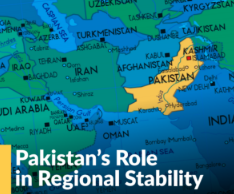
Geography plays significant role in the security threats and political opportunities of Pakistan. The country has been surrounded by four important states India, Afghanistan, Iran and China. It also connects with the Arabian Sea, which could help to connect Central Asia, South Asia and the Middle East. Historically, this place has been weak and powerful for Pakistan. On the other hand, the conflicts in the region have had a direct impact on Pakistan’s security. At the same time it is strategically located to join regional economic and diplomatic processes. Afghanistan is a key factor in Pakistan’s security equation. The decade-long conflict in Afghanistan has resulted in many consequences for Pakistan such as refugee flows, militancy, border insecurity and economical pressures. Fair (2014) attributes Pakistan’s security policies to events within Afghanistan on many occasions since the chaos in the western border has a direct impact on the internal security of Pakistan. Likewise, any developments in the Persian Gulf have great significance for Pakistan. It is estimated that million of Pakistanis are working in the Gulf countries and remittances from these countries are contributing a significant amount towards Pakistan’s economy. Thus, political tension or military conflict in the Middle East may pose economic and diplomatic problems for Islamabad. Pakistan’s ties with China also further enhance its strategic value. China-Pakistan Economic Corridor (CPEC) is a part of China’s Belt and Road Initiative (BRI) which has been launched to boost infrastructure, energy cooperation, regional connectivity. But the economic projects are very successful under the condition of regional peace and stability (Small, 2015). Thus, Pakistan’s efforts to ensure stability in the region will directly benefit Pakistan’s economic interests. Pakistan’s membership of the regional organisations is also symptomatic of the country’s emerging diplomatic mindset. Islamabad has access to opportunities provided by the Shanghai Cooperation Organisation, to interact with regional partners including China, Russia, central Asian countries and others in the region on a range of issues, including counter terrorism, economic cooperation, connectivity etc. (China, Shanghai Cooperation Organisation, 2024). As a result, it is a geographical challenge and opportunity for Pakistan. In addition to instability in its surrounding areas which pose a threat to national security, Pakistan’s location also offers great potential for diplomatic leadership. Mediation can be a tool for Pakistan to convert its geographical vulnerability into diplomatic muscle.
4. Historical Evolution of Pakistan’s Mediation Diplomacy
Mediation and facilitation have played an occasional part in Pakistan’s foreign policy in its diplomatic history. Pakistan’s security narrative is almost synonymous with military issues, especially with regards to its border security with India and issues in the western region, however the country’s security narrative also highlights its positive role in regional and international security. A major instance of diplomatic facilitation that Pakistan has witnessed in Pakistan is in the Cold War period and facilitating communication between the United States and China was one of them. Pakistan also helped with a secret trip in 1971 by the U.S. National Security Advisor Henry Kissinger to Beijing and this paved the way for subsequent normalisation of relations between Washington and Beijing (Kissinger, 2011). Pakistan was a de facto mediator in the talks, but its mediation efforts reflected its capacity to act as a bridge between two competing global players. Pakistan’s interactions with the Muslim majority countries have also given opportunities to Pakistan for diplomatic mediation. Pakistan has continuously been promoting dialogue and peaceful dispute resolution between the Muslim countries through various forums like Organization of Islamic Cooperation (OIC). The nation has been known to stress diplomacy rather than military on any political crisis rather than military confrontation. Pakistan has been active in mediation in particular in the case of Afghanistan. Afghanistan has been significant in Pakistan’s foreign and security policies throughout due to the geographic proximity, historical ties and security interdependency. Ever since the advent of the Soviet invasion of Afghanistan in 1979, Pakistan has had direct impacts on Afghan instability in the form of refugee pressures, arms proliferation and militant groups like the Haqqani (Haqqani, 2005). Since September 11 and the ensuing international intervention in Afghanistan, Pakistan has emerged as a significant player in the peace-building process in the region. Islamabad was involved in various diplomacy efforts to facilitate discussions and negotiations between Afghan stakeholders. International debate on Pakistan’s role has been plentiful, but its geographical and political significance ensured its participation in any viable Afghan settlement, as Pakistan was essential to the success or failure of the broader endeavour (Yusuf, 2018). The Pakistan diplomacy has taken another significant turn during the Afghan peace process between the United States and the Taliban. Islamabad helped facilitate dialogue by fostering communication among various parties and assisting in negotiations which led to the U.S.–Taliban agreement in 2020. Pakistan’s role after 2021 in the Afghan political transition proved the efficacy of mediation as a foreign policy tool despite the new challenges faced thereafter.
5. Pakistan’s Mediation Role in Afghanistan and Regional Security
The case of Afghanistan is the most outstanding example of the interplay between mediation and national security of Pakistan. The stability in Afghanistan will have an immediate impact on Pakistan on the ground due to the shared borders, ethnic and cultural linkages, economy of two countries and security issues. Afghanistan has been unstable for decades, which has led to security challenges for Pakistan. After the conflicts in Afghanistan during the Soviet occupation and during the civil war period, millions of Afghan refugees started to migrate to Pakistan. In addition, militant groups along the Pakistan-Afghanistan border also played a role in the terrorism and internal security issues (Fair, 2014). Acknowledging these challenges, Pakistan gradually began to move from war-oriented foreign policy to diplomacy. Islamabad was more and more stressing the need of a peaceful Afghanistan for the security and socio-economic development of Pakistan. This view was shared by others who understood that national security was not solely defined by military power but also by harmonious relations with its neighbours. Pakistan has played a multifaceted role in the Afghan affairs. The first is trying to improve the ability of Afghan political actors and international stakeholders to communicate with each other. Second, it has contributed to regional cooperation via channels that include Afghanistan’s neighbouring countries. Third, it has encouraged economic connectivity initiatives between Pakistan and Afghanistan and Central Asian countries. Afghan stability is not just of national concern to Pakistan. A peaceful Afghanistan would be a corridor for energy resources from Central Asia to the markets of South Asia. On the other hand, if this instability continues, it could encourage terrorism, organized crime and economic isolation. Thus, Afghanistan mediation by Pakistan is a regional obligation and a country security issue. But, Pakistan’s Afghan policies have been criticized and constrained. There have been doubts expressed by some international observers regarding the role and inconsistencies in Pakistan’s Afghan policy. Also, the domestic political issues, evolving Afghan political landscape, and conflicting regional powers have hindered the mediation process (International Crisis Group, 2023). However, Afghanistan is a region where Pakistan’s diplomacy could play an important role for regional stability even amidst these challenges.
6. Pakistan’s Role in Gulf and Middle Eastern Diplomacy
Another area where Pakistan’s mediation role is of great strategic importance is the Middle East. The country has established cordial political, economic and social ties with the Gulf nations and has historical and cultural ties with Iran as well. Balanced and equitable relations between these actors have been a crucial part of Pakistan’s Foreign policy. The Saudi-Iran competition has been a bane for Pakistan’s diplomatic policies in the past. A nation that has a close relationship with Saudi Arabia and a strong geographical link to Iran, Pakistan has tried to remain neutral and promote dialogue between regional rivals. Pak’s diplomacy is based on the fact that Pakistan does not want the polarization in the region. Energy insecurity, economic disruption and problems with Pakistani workers in the Middle East could be the negative impact of conflict between Gulf states or problems with Iran on Pakistan. In 2019, Pakistan has started diplomatic talks to thaw the relations between Saudi Arabia and Iran. The effort was a success in terms of Pakistan’s diplomatic effort to ease tensions in the region, even though it did not lead to a formal settlement, but it was a sign of Islamabad’s commitment to using diplomacy to resolve the tensions between the two communities. These initiatives demonstrate the idea of mediation as a means of national security as it helps in mitigating instability in the Middle East region which in turn helps Pakistan’s economic and strategic interest. With the restoration of Saudi-Iranian diplomatic relations in 2023, enabled most importantly by China, Pakistan has also offered new opportunities to foster regional cooperation. The more stable environment of the Gulf in turn brings benefits to Pakistan in terms of economic opportunity and lessening security threats, as well as enhancing regional connectivity. Pakistan’s geopolitical standing as a Muslim majority country, having ties with competing regional blocs, offers some diplomatic benefits. But neutrality and not too close of a bond with any regional actor is essential to the success of the mediation.
7. CPEC, Regional Connectivity, and Security through Cooperation
National security has increasingly come to involve economic connectivity. The CPEC is a good example of the link between economic cooperation and diplomatic stability. The primary goals of CPEC are to build transportation nodes, energy infrastructure and industrial cooperation between Pakistan and China. The project is part of the Belt and Road Initiative, which has regional implications as it is a link between western China and the Arabian Sea through Pakistan (Small, 2015). CPEC is more than just an economic project for Pakistan; it’s a strategic opportunity. Better connectivity can boost trade, promote investment, generate jobs and improve the significance of Pakistan in the region. But the success of CPEC is dependent on the political stability and security. Mediation and regional diplomacy can have a role in preventing tensions and encouraging cooperation between the neighbouring countries for the successful implementation of the CPEC. The benefits of connectivity projects can be enhanced if Afghanistan becomes stable, Pakistan-India relations are enhanced and the regional economic integration is strengthened. This illustrates the link between economic security and diplomatic mediating. In the present day, the protection of national interests is possible only in the conditions of peaceful environments, which provide conditions for economic development.
8. Pakistan and the Shanghai Cooperation Organization (SCO)
Pakistan’s membership in the Shanghai Cooperation Organization has opened the door for more possibilities of regional diplomacy. The SCO offers an opportunity to Pakistan for security and economic cooperation with China, Russia, Central Asian nations and other actors in the region. The organization concentrates on the cooperation in the fight against terrorism, separatism and extremism and on the economic connectivity and political dialogue. The inclusion of Pakistan in the SCO also highlights its policy of looking for regional institutions which can be engaged besides bilateral ones. Pakistan may play a role in the discussion on security matters in the region like Afghanistan’s future, counterterrorism cooperation and economy integration under SCO. This multilateral platform offers opportunities for Pakistan to enhance its mediation efforts
9. Challenges to Pakistan’s Mediation Diplomacy
Despite the potential for being an effective regional mediator, Pakistan has several challenges to overcome.
First, domestic politics may undermine diplomatic efforts, as effective mediation requires a strong and stable government and long-term planning.
Second, Pakistan has limited economic resources, and a significant portion of the national budget is allocated to maintaining diplomatic missions, research, and other expenses.
Third, there are complex regional contradictions, and Pakistan has to balance its relationships with several major powers, including China, the United States, India, Iran, and Gulf states.
Fourth, Pakistan has to ensure that all parties view it as a neutral party, which is challenging given its sometimes controversial ties to other countries.
Finally, bilateral disputes, particularly with Pakistan’s largest regional rival India, may hinder its attempts to serve as a mediator.
10. Policy Recommendations
To build up mediation as an element of national security, Pakistan can take the following steps:
1. Enhancing Diplomatic Infrastructure
Pakistan needs to invest in training its diplomatic corps in negotiation, mediation, and conflict resolution techniques.
2. Leveraging Economic Diplomacy
Economic stability is a prerequisite for effective diplomacy, so Pakistan needs to focus on building economic ties and partnerships.
3. Advocating for Regional forms
Pakistan should promote the creation of regional forums that can facilitate dialogue between rival states.
4. Ensuring Strategic Balancing
A successful mediation strategy requires careful balancing between different allies and partners.
5. Building Analytical Capacity
Pakistan needs to develop its analytical capacity in the field of mediation by funding research and think tanks that focus on conflict resolution and regional security studies.
11. Conclusion
In the twenty-first century, national security relies more on military strength, diplomatic effectiveness, economic stability, and regional cooperation. For Pakistan, mediation is an emerging tool that allows for the pursuit of national interests and regional stability at the same time. Pakistan’s location puts it at the heart of some of the world’s most significant regions. While this creates security challenges, it also opens doors for diplomatic leadership. Through its experiences in Afghanistan, engagement with Middle Eastern countries, involvement in regional organizations, and support for connectivity initiatives, Pakistan has shown it can facilitate dialogue. However, mediation needs credibility, consistency, and strong institutions to succeed. Pakistan must tackle domestic political issues, strengthen its economic base, and maintain balanced relations with regional rivals. A successful mediation strategy calls for patience, neutrality, and a long-term commitment. Ultimately, mediation should not replace traditional security policies but should complement them. Military readiness is still important, but lasting security means preventing conflicts before they endanger national interests. By investing in mediation diplomacy, Pakistan can turn its geographic challenges into strategic chances and make a valuable contribution to regional peace and stability.
References
Asian Development Bank. (2024). Asian Development Outlook 2024. Asian Development Bank.
Buzan, B., Wæver, O., & de Wilde, J. (1998). Security: A New Framework for Analysis. Lynne Rienner Publishers.
Cohen, S. P. (2011). The Future of Pakistan. Brookings Institution Press.
Fair, C. C. (2014). Fighting to the End: The Pakistan Army’s Way of War. Oxford University Press.
Haqqani, H. (2005). Pakistan: Between Mosque and Military. Carnegie Endowment for International Peace.
International Crisis Group. (2023). Pakistan’s Political and Security Challenges. International Crisis Group.
Kissinger, H. (2011). On China. Penguin Press.
Morgenthau, H. J. (1948). Politics Among Nations: The Struggle for Power and Peace. Alfred A. Knopf.
Nye, J. S. (2004). Soft Power: The Means to Success in World Politics. PublicAffairs.
Shanghai Cooperation Organisation. (2024). Official Documents and Information. SCO Secretariat.
Small, A. (2015). The China-Pakistan Axis: Asia’s New Geopolitics. Oxford University Press.
Stockholm International Peace Research Institute. (2024). SIPRI Yearbook 2024: Armaments, Disarmament and International Security. SIPRI.
United Nations. (2012). United Nations Guidance for Effective Mediation. United Nations.
World Bank. (2024). Pakistan Development Update. World Bank.
Yusuf, M. (2018). Brokering Peace in Nuclear Environments: U.S. Crisis Management in South Asia. Stanford University Press.
Posted in Security and Peace, South Asia

From a line drawn in 1914 to a standoff at Taksing in 2026, the eastern…